Introduction
Suddenly the power goes out. Everything goes pitch black. What's the first thing you look for? Or imagine that late dog walk on a dark autumn evening, or a camping trip far from civilization. In those moments, a good light source is absolutely invaluable. Today, a modern flashlight So much more than just a light bulb in a tube, it's a high-tech tool for safety, convenience and adventure. But trying to understand all the talk about lumens, IP ratings and different batteries can feel like navigating a jungle. This guide is your machete. We'll break down everything you need to know, step by step, so you can find the perfect flashlight for you, whether you need a simple light for your car or a real light monster for professional jobs.
What is a flashlight?
Simply put, a flashlight is a portable, battery-powered light source. The story behind it is actually quite interesting. The very first models from the late 1800s had such weak batteries that they could only shine in short bursts. They could only “flash” light, which gave them the English name “flashlight”. What a difference compared to today! Today's flashlights are pure technological marvels, almost always with LED technology (Light Emitting Diode). This revolution has given us incredibly bright light, great battery life and a durability that the old models could only dream of, all in a small and lightweight format.
The areas of use have exploded in step with technology. At home, the flashlight is an obvious part of the emergency kit, indispensable when the plug goes out or when you have to look for something deep in the storage room. For the outdoorsman, a strong flashlight a vital gadget during night hikes, camping or fishing trips at dawn. Countless professional groups, from security guards and police officers to electricians and mechanics, are completely dependent on specially adapted lamps in their work. A reliable flashlight is simply a must-have in every home, car and backpack.

Flashlight best in test overview
Trying to find that lamp that is truly “best in test” can be difficult in a market that is constantly changing. But what does the stamp really mean? Most often, it concerns models that have performed at the top in independent tests in trade magazines, gadget sites or in forums for enthusiasts. In the tests, things like brightness, range, battery life, shock resistance and how well it resists water are looked at, often according to the tough ANSI/PLATO FL1 standard. Sometimes more subjective things like feel in the hand and how easy it is to use also come into play.
Let's look at the trends for flashlight best in test 2024 we see a clear pattern: the lamps are becoming increasingly efficient (more light per watt), smarter features such as USB C charging directly in the lamp are almost standard, and they are built like armored vehicles, often in aircraft aluminum. If we dare to predict the future, it will flashlight best in test 2025 likely to have even smarter battery solutions, perhaps be able to be powered by several different battery types, and have more advanced optics that reproduce colors in a more natural way. Brands like Fenix, Olight, and Ledlenser continue to be at the forefront because they manage to combine brightness, convenience, and reliable features that suit most people.
-
Sale!

Manker TC02 - 150 Lumen Keychain Flashlight / USB-Charger
$ 16.20 $ 25.37Price range: $16.20 to $25.37 Select variant This product has several variants. The various options can be selected on the product page -
Sale!
 1-2 weeks delivery time
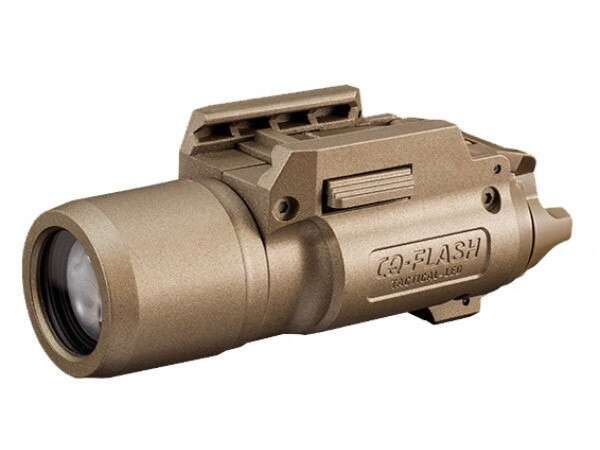
TM CQ-Flash M3 Tactical Flashlight - Tan | Tokyo Marui
The original price was: $40.35.$ 35.67The current price is: $35.67. Choose or customize -
Sale!

JET-T2 Compact LED Weapon Light - 520 Lumens - NITEYE
The original price was: $91.61.$ 81.42The current price is: $81.42. Choose or customize
Lumen and brightness
When talking about a modern flashlight lumens is the first word that comes up. Lumen (lm) is simply a measure of the total amount of visible light that the lamp emits. More lumens means more light. Period. It's the most important number for comparing raw power between different models and a determining factor in how useful the lamp will be.
But does more lumens always mean better? No, that's a common mistake. An extremely strong flashlight with thousands of lumens is of course impressive, but often completely unnecessary for common tasks like walking the dog. A high lumen also creates more heat and eats up battery. The trick is to find the right balance for your specific needs. A good flashlight has everything from a weak “moonlight mode” of under one lumen, perfect for reading a map in the dark, to a “turbo mode” of thousands of lumens for when you really need to light up the entire forest.
What is lumen and why is it important?
Lumen is therefore the direct measure of a flashlight total luminous flux. Think of it like the total number of gallons of water that squirt out of a fire hose, it gives you an idea of the total power. It’s a critical number because it gives us a common language for comparing lights. Without lumens, we’d be left with vague terms like “super bright” and have no idea if a strong flashlight is truly stronger than another.
Difference between lumens and lux
While lumens measure the total light output from a lamp, lux and candela measure the intensity of light on a surface or in a specific direction. Imagine shining your light flashlight on a wall. Lumen is the total amount of light leaving the lamp, while lux is how bright it actually is at a specific point on the wall. Candela is a measure of how intense the light beam is at its center, which is related to the range. A strong flashlight Built to shine far (a “thrower”) can have a sky-high candela value and reach far, even if its lumen output is not the highest on the market.
How many lumens are needed for different purposes?
Lumens requirements vary enormously. Running with too much light is a waste of battery, but too little can be ineffective or even dangerous. Here's a cheat sheet for choosing the right one flashlight:
- Everyday use & bedside table (approx. 10-150 lumens): Perfect for finding the keyhole, rummaging through your bag, reading in the tent or navigating your home during a power outage.
- Dog walks & camping (approx. 150-400 lumens): Lights up the path 15-20 meters in front of you and provides a good overview of the campsite.
- Hiking, outdoor life & work (approx. 400-1200 lumens): Provides a powerful and wide light image that is perfect for moving in unfamiliar terrain at night or inspecting a larger work area.
- Professional, search & rescue (1200+ lumens): Here we are talking about a strong flashlight for those who need maximum range and a light output that turns night into day to search large areas.
💡 Golden tips: When choosing a flashlight, keep in mind that more lumens is not always better. For everyday use, 100–150 lumens are often enough, for dog walking or camping, 150–400 lumens are fine, while outdoor activities and work require 400–1200 lumens. Only for professional missions such as search and rescue do you need 1200 lumens or more. Adjust the brightness to your needs to get the best balance between performance and battery life.

Range and beam angle
En flashlight may have lots of lumens, but if the light is scattered in all directions, it won't reach very far. The range, measured in meters, is just that: how far the light beam reaches and still provides usable light. This is super important for anyone who needs to see things from a distance, like hunters, boaters, or those working in search and rescue.
The range of the lamp is a combination of lumens and, most importantly, the optics, i.e. how the reflector or lens is designed. A deep, smooth reflector concentrates the light into a narrow and intense beam that maximizes the range. A shallower, slightly knobby reflector or a special TIR lens instead spreads the light widely, which is better for illuminating what is close. A really strong flashlight often combines high lumen output with smart optics to reach impressive distances.
How is reach measured?
The scope of a flashlight is measured according to an international standard (ANSI/PLATO FL1). The official range is the distance in meters where the light has decreased to 0,25 lux, which is approximately the light from a full moon. This allows us to compare apples to apples. But remember, this is bright enough to discover something, not to see details. A good rule of thumb is that the practical the range to see what something is is about half the stated range for your strong flashlight.
Narrow vs. wide beam angle
The choice between a narrow and a wide light pattern depends entirely on what you are going to do with your flashlightWe often talk about “hotspot” (the bright dot in the middle) and “spill” (the weaker light around it).
- Narrow beam (spot/throw): Focuses the light into a small, super bright spot with little spillage. Provides maximum range and is perfect for spotting things far away. A strong flashlight with an extremely focused beam is often called a “thrower”.
- Wide beam (flood): Spreads light evenly over a large area without a clear center point. Great for illuminating a work area, a tent or the path right in front of your feet. You get a good overview of your surroundings and avoid "tunnel vision".
When should you choose which type?
Bet on one flashlight with a narrow beam (thrower) if your main purpose is to see far, perfect for hunting, scouting, or if you are moving in open terrain. Choose a wide beam (flooder) for camping, DIY jobs, or walking where it is more important to see what is around you. Many modern all-round lamps, especially a more advanced strong flashlight, offers a good mix of both, or has a zoom function that lets you switch between wide and narrow light.
Batteries and operating time
Without a reliable power source, even the world's best flashlight just an expensive letterpress. The batteries are the key to how long and how well the lamp performs. Today there are two main types: regular disposable batteries and rechargeable ones. The operating time, which is stated in hours, of course varies wildly depending on which light mode you use. A hot tip is to look at independent tests that show “runtime curves”, since almost no lamp can run at its maximum setting for more than a minute before it automatically switches down to avoid overheating.
The battery choice not only affects the operating time, but also how much power the lamp can provide. A strong flashlight almost always require modern, rechargeable lithium-ion batteries to be able to deliver the high currents required for maximum mode. Regular alkaline batteries simply can't keep up. Development is happening at lightning speed, and built-in batteries with simple USB C charging have become increasingly common, which is incredibly convenient and cheaper in the long run.
Common battery types (AA, AAA, 18650, rechargeable via USB)
Here are the most common batteries you will encounter in a flashlight:
- AA/AAA: Easy to find and inexpensive. Available as disposable or rechargeable. They provide lower performance and are usually found in smaller, simpler lamps.
- CR123A: A disposable lithium battery that is popular in tactical lights. It performs well, holds a charge for ages (10+ years) and is excellent in cold weather, but costs a fortune.
- 18650: The king of flashlight batteries. A rechargeable lithium-ion battery that is the mainstay of almost every strong flashlight thanks to its perfect mix of capacity and power.
- 21700: The modern successor to the 18650. A little bigger, but offers significantly more power and is quickly becoming the new standard for performance lights.
- Built-in/USB charging: More and more lamps have a built-in battery that you charge directly via a USB port, usually modern USB C. Extremely convenient and you don't need a separate charger.
Pros and cons of rechargeable flashlights
For the vast majority, a rechargeable flashlight the smartest and most economical choice. The advantages are clear: it will be much cheaper in the long run, you will get better and more consistent performance (especially with a strong flashlight), and it is kinder to the environment than constantly buying new batteries. The disadvantage may be a higher purchase price. If the battery is built-in, you also cannot replace it if it runs out, which can be a disadvantage on long trips without access to a power bank.

Tips for longer battery life
Do you want to squeeze the most out of your batteries? flashlight? Use the lowest light setting required for the task. On a modern strong flashlight the low setting lasts surprisingly long. Use the light's button lock ("lockout") so it doesn't accidentally turn on in your bag and pull out the battery. Store the light and batteries in a cool place. If you're going to store lithium-ion batteries for a long time, they're best left about half charged.
IP rating and water resistance
Are you using your flashlight outdoors, sooner or later it will encounter rain, snow or maybe even an involuntary dip. Therefore, the lamp's resistance to water and dust is super important for it to work when it really matters. The resistance is indicated by an IP value (Ingress Protection), which is an international standard. A high IP rating is proof that the manufacturer has thought about seals and gaskets to withstand tough conditions.
By understanding the IP system, you can choose a lamp that matches the environments you live in. A strong flashlight for serious outdoor activities or professional work almost always has a high rating (IP67 or IP68), which guarantees that it will work even in the worst possible weather. Investing in a waterproof flashlight is cheap insurance that it won't let you down.
What is IP class?
The IP rating consists of “IP” and two numbers. The first number (0-6) indicates the protection against dust and dirt. The second number (0-9) indicates the protection against water. For a flashlight often see “IPX”, where “X” means that dust protection is not specified and all the focus is on water resistance. A strong flashlight with the IP68 rating is therefore completely dustproof (number 6) and can be submerged in water for a longer period of time (number 8). For more information on emergency preparedness and equipment, The Swedish Civil Contingencies Agency (MSB) lots of good tips.
Common levels (IPX4, IPX7, IP68)
For flashlights, these are the most common and important IP levels to keep an eye on:
- IPX4 (Splashproof): Protected against splashing water from all directions. This is the minimum level for an outdoor lamp and will work in light rain.
- IPX7 (Waterproof): Can be submerged to a depth of 1 meter for 30 minutes. A flashlight With this rating, it can easily withstand being dropped into a lake or deep puddle of water.
- IP68 (Dust and pressure waterproof): Completely protected against dust and able to be submerged in water for extended periods of time, the manufacturer specifies exactly how deep and for how long (e.g. 2 meters for 4 hours). This is the gold standard for a truly high-quality and strong flashlight.
When is a high IP class necessary?
A high IP rating (IPX7 or higher) is a must if you are going to use your flashlight in pouring rain, near water (boat, fishing, kayak) or in really dusty and dirty environments such as construction sites or workshops. Even for ordinary outdoor activities, a high IP class provides a nice peace of mind. For a strong flashlight which costs a little more, an IP68 rating is a clear sign of a premium design that is built to last.

LED technology and color temperature
The heart of every mother flashlight is the LED diode. LED has completely changed portable lighting thanks to its unbeatable mix of efficiency, longevity and durability. Compared to old incandescent bulbs, LEDs provide an incredible amount of light for the same amount of battery, last practically forever and can withstand shocks without any problems.
But it's not just about how bright the light is, but also about what type of light it is. This is usually described in terms of color temperature and color rendering. Color temperature (measured in Kelvin, K) determines whether the light is perceived as cool and bluish or warm and yellowish. Color rendering (CRI) shows how well the lamp is at displaying colors in a natural way. The choice here can affect both how well you see details and how tiring the light is on the eyes, which is especially important for a strong flashlight that are used for a long time at a time.
Advantages of LED compared to older lamps
The advantages of an LED flashlight are so large that older technologies are completely out of date. They are extremely energy efficient (giving 5-10 times longer battery life), last up to 50 hours (you never have to change a “light bulb”), and are much more resistant to shock and vibration. This makes a strong flashlight with LED the obvious choice for all situations.

Cool white vs warm white light
The color of light affects how we see our surroundings:
- Cool white light (Cool White, approx. 5500-7000 K): This is the most common type in a strong flashlight, especially those made for maximum performance. The light has a clear, bluish tone that our eyes perceive as very bright. Perfect for getting maximum perceived brightness and range. The downside is that colors can often look a little washed out.
- Neutral/Warm White light (Neutral/Warm White, approx. 3000-5000 K): This light is more similar to sunlight and has a more yellow tone. The big advantage is that it reproduces colors much more naturally, making it easier to see shades in nature. It is also easier on the eyes and works better in fog or rain, as the blue light is not reflected as much in the water droplets.
Color temperature in practice
Normally, a flashlight with cool white light is a good all-round choice that gives a feeling of maximum strength. But if you are a photographer, hunter, electrician or just want a more pleasant and natural light, a strong flashlight with neutral white light and high color rendering (high CRI) would be a much better choice. It makes it easier to follow a blood trail, distinguish color-coded cables, or assess the color of equipment.
Special functions
Once the basics like brightness and waterproofness are in place, it's time for the fun: the special features that can make a great flashlight into an indispensable multi-tool. Depending on what you are going to use the lamp for, these features can be absolutely crucial.
Imagine being able to pop open the light on the hood and have both hands free. That's exactly what a magnet at the bottom does. A strong flashlight in the higher price range often have several smart features as standard, such as programmable modes, battery level indicator or even the ability to act as a power bank and charge your phone in an emergency. And don't forget the headlamp, a great option that gives you light right where you look, with your hands completely free.
- Flashlight with magnet: A strong magnet at the bottom is a godsend for mechanics, tradesmen or car owners. Attach it to a metal surface and you have perfect work lighting.
- Zoom function: Allows you to adjust the light beam from a super wide, even light pattern to a narrow, long-throw beam. Provides enormous flexibility, but the trade-off is often poorer water resistance and a less efficient light pattern compared to a lamp with fixed optics.
- Strobe and SOS mode: The strobe provides a rapid, blinding flashing light that can be used for self-defense or to call attention. The SOS mode automatically flashes the international distress signal (… — …), a potential lifesaver if you are lost.
- Headlamps as an option: For running, climbing, skiing or when setting up your tent in the dark, a headlamp is often the best choice. Check out our range of headlamps to find models that are made for this purpose.
Flashlight for various uses
The best flashlight is the one that is best for you and your needs. A small, feather-light flashlight is perfect on your key ring, while a large and extremely strong flashlight is a must for search and rescue teams. Thinking about what you will actually do with the lamp is the final, crucial step to making a really good purchase.
Below we'll go over what to consider for some common situations. A hunter has completely different requirements than a child playing in the garden, and a car mechanic needs features that are unnecessary for a camper. A flashlight best in test is often a model that is so versatile that it works well for several different things.
-
Sale!
Manker TC02 - 150 Lumen Keychain Flashlight / USB-Charger
$ 16.20 $ 25.37Price range: $16.20 to $25.37 Select variant This product has several variants. The various options can be selected on the product page -
Sale!
1-2 weeks delivery time
TM CQ-Flash M3 Tactical Flashlight - Tan | Tokyo Marui
The original price was: $40.35.$ 35.67The current price is: $35.67. Choose or customize -
Sale!
JET-T2 Compact LED Weapon Light - 520 Lumens - NITEYE
The original price was: $91.61.$ 81.42The current price is: $81.42. Choose or customize

Flashlight for children
When it comes to a flashlight for children, safety, simplicity and durability are king. Choose a model with deliberately low brightness (under 100 lumens) to avoid eye damage. A colorful and robust design that can withstand being dropped is a big plus. A single button and no complicated modes are the best. A slightly more expensive and more strong flashlight can also work if it has a simple interface and can be “locked” in a low light mode.
Flashlight for camping and outdoor activities
For camping and outdoor activities, versatility is key. You need a flashlight with a good mix of range (to see ahead on the trail) and a wide light pattern (to illuminate the campsite). Waterproof (IPX7 or higher) is a requirement. A strong flashlight with multiple light modes, including a super-low "moonlight" mode (about 1 lumen) and a red light to preserve night vision in the tent is perfect. Rechargeable 18650 or 21700 batteries are preferable, preferably with the ability to charge from a power bank.
Flashlight for hunting and fishing
Here, completely different requirements are set. Hunters and fishermen need an extremely robust, reliable and waterproof flashlight (IP68). Long range is often a priority for scouting a field or finding prey. Many hunters want lights with filters or dedicated LEDs for red or green light, as many animals have difficulty seeing these colors. A strong flashlight with a silent button, a good grip even with gloves and the ability to mount on a weapon are also big advantages.
Work flashlights
For professionals such as craftsmen or mechanics, durability and smart features are often more important than extreme brightness. A work light should be resistant to impact, chemicals and have a high IP rating. Features such as a magnetic base, belt clip and a wide, even light pattern – preferably with high color rendering (High CRI) so that you can see colors correctly – are often more important than long range. A strong flashlight This category could also include an angled lamp that you attach to your breast pocket.
Flashlight for car and emergency
To have a good flashlight in the glove compartment is a given. Choose a model that is compact but powerful. Functions such as SOS and strobe can be invaluable for signaling for help. Some special models have a built-in glass breaker and belt cutter. A strong flashlight which is either powered by long-lasting CR123A batteries or can be charged via the car's USB port is a smart choice to ensure it is always ready.
Säkerhetsaspekter
Even if a flashlight is a safety tool, there are a few things to keep in mind to use it safely. This is especially true when children are involved and when handling the increasingly powerful models. A modern, strong flashlight can get really hot and the intense light can damage your eyes if you are not careful.
Being aware of the risks is part of being a responsible flashlight owner. Proper battery management is essential, not only for the lifespan of the flashlight but above all for your own safety. It reduces the risk of overheating, leakage or, in rare cases, explosions. Finally, it is important to think about the environment and recycle old batteries properly.
Flashlight for child safety
Teach children the golden rule when using a flashlight: never shine a light directly into someone's eyes. Even the light from a moderate lamp can be blinding and uncomfortable. Choose models that don't get too hot and have a button lock so they don't turn on in a bag. A simpler and smaller strong flashlight is always the safest and best choice for the youngest adventurers.
⚠️ Warning: Never let children use a bright flashlight without supervision. Even moderate light can be blinding and damage the eyes. Therefore, always choose models with low brightness (under 100 lumens), simple button operation and a button lock so that the light does not turn on accidentally in a bag or pocket. A sturdy but weaker flashlight is the safest choice for younger users.
Overheating and battery management
En strong flashlight can get very hot, especially on maximum setting. Most quality lights have a built-in overheating protection that automatically reduces the brightness. Always treat lithium-ion batteries (18650, 21700, etc.) with respect: only use quality batteries and chargers from well-known brands, and make sure they are never short-circuited or damaged. If a battery looks swollen or damaged, stop using it immediately and return it for recycling.

Environmental aspects (battery recycling)
When the batteries for your flashlight has done its job, it is extremely important that they are recycled correctly. They contain both environmentally hazardous substances and valuable metals that can be reused. Always leave old batteries in a battery container, at a recycling center or in a store that accepts them. It is an easy way to make an effort for the environment. The Swedish Environmental Protection Agency has good information on how to do it right.
Buying guide, what should you consider?
Okay, now you have everything from lumens to IP ratings covered. Time to tie the knot and summarize what you should consider before you buy your new one. flashlight. Making a smart choice is about being honest about what you need and then finding a balance between features and budget. A cheap lamp from the grocery store may work for simple tasks, but when it really comes down to it, it always pays to invest in quality and reliability.
En strong flashlight doesn't have to cost a fortune, but price and quality often go hand in hand when it comes to construction, electronics, and warranties. Consider the total cost: a slightly more expensive, rechargeable lamp will almost always be cheaper in the long run than a cheap lamp that constantly needs new batteries. Read independent reviews, compare specifications, and choose a well-known brand for better support and a safer deal.
Budget and quality
Determine your budget, but don't be afraid to be a little flexible. A flashlight in the price range of 300-800 kronor usually provide incredible value for money and cover most needs. Then you get a robust aluminum lamp with rechargeable batteries and good performance. In the premium segment, from 800 kronor and up, you will find a strong flashlight with special features, extreme durability and the very latest technology. Remember that quality here means reliability, which can be invaluable.
Brands and warranties
Choosing one flashlight from a well-known brand like Fenix, Olight, Ledlenser, Nitecore or Petzl is a strong recommendation. These manufacturers have a reputation to protect and invest in development and quality control, which gives you a better product and usually generous warranties. A long warranty period (often 2-5 years) is a good sign that the manufacturer trusts their product. A strong flashlight from a reputable brand is a safer investment.
Key specifications to compare
When comparing different models, use this checklist to find the right one flashlight for you:
- Lumen (Brightness): How much light do you need? actually?
- Range/Candela: How far do you need to be able to see? Is a focused beam important?
- Operating time (Hours): How long does it need to be lit in the modes you will use the most?
- Battery type: Do you prefer the convenience of USB charging, the flexibility of replaceable batteries, or the availability of AA/AAA?
- IP class: How resistant to water and dust does it have to be?
- Size and weight: Should it fit in your pocket, on your keychain, or does it not matter?
- Light image & Quality: Do you want a wide flood, a long throw, or a good all-round beam? Is natural color rendering (CRI) important? Weighing these factors against each other will help you find the perfect, or even a strong flashlight, which feels tailor-made for you.
Frequently Asked Questions (FAQ)
There are many questions about flashlights, and some come up time and time again. Getting answers to these can make you feel even more confident about your choice. Here we have collected the most common concerns.
Whether you're wondering what's "bright enough" for a mountain hike or how long your new gadget will last, chances are you'll find the answer here. A modern strong flashlight may seem complicated, but with the right information, the choice becomes both easier and more enjoyable.
How many lumens is good for camping? For regular camping, a flashlight with a maximum output of 300-1000 lumens a great choice. The most important thing is that it has several modes. You might use 30 lumens around the tent, 300 lumens on the trail and the maximum mode to quickly scout the edge of the forest.
Is a 1000 lumen flashlight too bright? Both yes and no. Most 1000+ lumen lights also have several dimmer and more useful modes. Think of the high lumen count as a resource you can pull out when needed. 95% of the time you will probably use a 50-300 lumen mode. Think of “turbo” as a temporary boost, not a normal mode.
How long does an LED flashlight last? The LED itself has a lifespan of 25 to 000 hours. In practice, this means that it will last longer than the rest of the lamp. What wears out and needs to be replaced after a while are the rechargeable batteries, which usually last 50-000 charges before they start to lose capacity.
What IP class is needed for rainy conditions? To be on the safe side in the rain, you should choose a strong flashlight with at least IPX6 (splashproof) or IPX7 (waterproof down to 1 meter). IPX4 protects against splashes but is not recommended for continuous rain. For total peace of mind in all weather conditions, IP68 is always the best choice.