Introduction
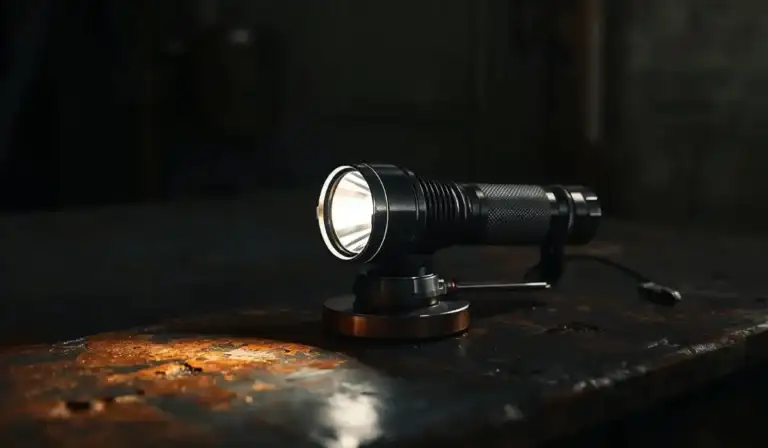
We've all been there. The power goes out, you frantically search for your flashlight, and when you finally find it... the batteries are dead. It's a classic and deeply frustrating situation. But there's a modern, reliable, and smarter solution: a flashlight rechargeable. Instead of constantly hunting for new disposable batteries, you simply charge it just like your mobile phone. It gives you the peace of mind of knowing that it is always ready when you need it. Switching to a rechargeable model is not only smart for your emergency preparedness, it is also a wise choice for both your wallet and the environment in the long run. You simply avoid those constant small purchases.
Battery types in rechargeable flashlights
Forget everything else for a second, the battery is the most important thing in a flashlight rechargeable. It's the motor that drives everything. The battery in the lamp affects everything: how bright it shines, how long it lasts, how much it weighs and how it feels in the hand. Development has been rapid, and today's rechargeable batteries are light years better than the old tired versions from the past. Now it's almost exclusively lithium-ion (Li-ion), a technology that is an expert at packing lots of energy into a small area. It's thanks to this that we can have flashlights that are both incredibly powerful and surprisingly small.
Having a little knowledge of the different battery types will help you find the right one. rechargeable flashlight best in test the model that actually suits you. Are you looking for maximum brightness to be able to search an entire field, or a faithful servant that lights up for several days on low power during a camping trip? Some batteries are made for short, intense discharges, others for long and tough endurance. By understanding the differences, you ensure that you are not only buying a lamp that shines brightly, but one that you can rely on for many years to come.
Common battery types (18650, 21700, AA/AAA rechargeable)

When you look at a modern, high-performance rechargeable flashlight you'll see three names over and over again: 18650, 21700 and the good old AA/AAA in rechargeable form. The 18650 has long been the king of the pack, a powerhouse (approx. 18mm x 65mm) that offers the perfect balance between size and power. But recently its big brother, the 21700 battery (approx. 21mm x 70mm), has been taking up more and more space.
It's a little bigger but holds significantly more juice, making flashlights that burn brighter and last longer. Finally, we have the rechargeable AA/AAA batteries, usually the NiMH type. Their strength is that they're so common and versatile, but they simply can't match the raw power of lithium-ion batteries.
Advantages and disadvantages of different battery types
This is a classic compromise. If you choose a light with an 18650 or 21700 battery, you get brutal brightness and long runtimes. That's why these batteries are in almost every model that is named rechargeable flashlight best in test. The downside? You can't just throw in a pair of regular Duracells when the crisis hits. The rechargeable AA/AAA batteries instead give you total freedom. They're everywhere and fit in lots of other gadgets. But you have to sacrifice that real top performance and runtime at high settings. The question is what's more important to you: superior power or unbeatable flexibility?
Lifespan and capacity
How long a flashlight lasts is a matter of battery capacity, which is measured in milliampere hours (mAh). Think of it like the size of a tank - the higher the mAh, the more fuel. A flashlight rechargeable of high quality with an 18650 battery is today between 2600 and 3600 mAh. A 21700 battery can boast a full 4000–5000 mAh. The lifespan of the battery itself is measured in charge cycles. Most good lithium-ion batteries can handle around 300–500 full charges (from empty to full) before they start to lose their sting. So with a little care, you have a battery that performs at its best for several years.
Charging methods
Now for what is perhaps the greatest luxury of a modern flashlight rechargeable: the charging itself. Forget the days when you had to fiddle with batteries and plug them into a clunky wall charger. Today, almost every decent flashlight has a built-in charging port. It makes everything incredibly easier. Whether you have a power bank, a computer, a car charger, or a regular wall outlet nearby, you can give your light new energy.
Technology has given us several smart and convenient solutions. Everything from the universal USB-C port to waterproof magnetic connectors. A rechargeable flashlight best in test often have a charging method that is both fast, safe and ready for tough times. How the light is charged can even affect how waterproof and durable it is in the long run, so it's a detail worth looking into.
USB charging (micro-USB, USB-C)
The most common method for charging a flashlight rechargeable is via USB. Older and cheaper models often use a micro-USB port. It works, but can be a bit tricky to get right. Newer, sharper flashlights have almost always switched to the modern USB-C standard. The advantages of USB-C are obvious: it's not only faster, it's also reversible (no more wrong-way plugs in the dark!) and probably uses the same cable as your phone or laptop. Fewer cables to keep track of, simply put.
Magnetic charging
If you see a flashlight with magnetic charging, you're probably looking at a premium model. And there's a good reason for that. Instead of an open port with a rubber flap, the flashlight has a magnetic contact point. The charging cable clicks into place, quickly and securely. Not only is this incredibly convenient in the dark or with gloves on, it also creates a completely sealed and waterproof unit. A flashlight with magnetic charging therefore often has a higher IP rating and is less sensitive to dirt and moisture. A common feature of a rechargeable flashlight best in test.
Docking stations and external chargers
For professionals like police officers and security guards, or for the true enthusiast and more rechargeable flashlight, a docking station is worth its weight in gold. The lamp is simply placed in its holder, which is connected to the power supply in the car or at the station. Then the flashlight is guaranteed to always be fully charged and ready. External chargers are still super relevant. They allow you to charge extra batteries on the side, so that you can switch from an empty to a full battery in a flash. Invaluable during long work shifts or when you are out in nature without access to electricity.
Uptime and performance
Uptime is one of the first things you look at when choosing a flashlight rechargeable. It is simply the time the lamp can shine on a single charge. Manufacturers are usually good at specifying the operating time for each light mode, from the dim “mysleek” light that can last for weeks, to the brutal “turbo” mode that may only last a few minutes before the lamp automatically steps down in brightness to protect itself from overheating.
The performance of rechargeable flashlight However, it's about more than just maxed out lumens. A really good flashlight has smart electronics that regulate the power and ensure that the light doesn't just die out when the battery starts to run out. Instead, it dims the light gradually, giving you plenty of time to find the charger. Many models also have a smart little battery indicator, often an LED that changes color from green to red, so you always know how much power is left.
How long does a fully charged battery last?
This depends entirely on how you use your flashlight rechargeable. On a really low setting, perhaps 10-50 lumens, a modern lamp with a good 18650 battery can shine for several days straight. Perfect for reading in the tent or as night lighting at the campsite. On the other hand, if you turn it on at a strong setting around 1000 lumens, you can expect the battery to last for 1,5 to 3 hours. The extreme turbo modes are intended for short, intense needs such as illuminating something from a distance – and rarely last more than a minute before the lamp itself lowers the brightness to manage the heat.
Factors affecting operating time (lumen, location, temperature)

Several things affect how long the battery actually lasts. The most obvious is the brightness - more lumens consume more battery. Special modes like strobe also draw a lot of power. One factor many forget is the cold. Lithium-ion batteries are not big fans of sub-zero temperatures. The chemical process in them becomes slower, which results in poorer performance and shorter operating time. A rechargeable flashlight best in test often have higher quality electronics and batteries that handle cold better than cheaper alternatives.
Tips for extending battery life
There are many things you can do to get more time out of each charge. The golden rule is simple: don't use more light than you need. Don't drive at maximum power unnecessarily. Store the light at room temperature and avoid leaving it in a hot or cold car. If you know that the flashlight won't be used for a while, it's best to store the battery with about 50% charge. This is the level at which lithium-ion batteries thrive best during long-term storage. With these little tricks, you can maximize both the battery's performance and the lifespan of your rechargeable flashlight best in test.
Safety during charging and use
First of all: a modern flashlight from a well-known brand is a safe product. But we are still talking about powerful batteries, so a little common sense never hurts. Lithium-ion batteries store a lot of energy, and if they are damaged or handled incorrectly, in rare cases there can be risks such as overheating or short circuits. A quality flashlight rechargeable However, batteries from a reputable manufacturer always have several protection circuits designed to prevent just this, such as protection against overcharging and short circuiting.
Choosing a flashlight from a well-known brand is the easiest insurance you can give yourself. The major manufacturers invest enormous resources in testing and safety certifications. This means that a rechargeable flashlight best in test is not only strong and smart, but also built with your safety in mind. For more general advice about batteries, the Swedish Electrical Safety Authority's website is a good resource.
Overheating and fire safety
The biggest risk with really powerful flashlights is heat. A modern flashlight rechargeable almost always have a built-in “heat guard” (often called ATR Advanced Temperature Regulation). A sensor detects when the lamp gets too hot and automatically lowers the brightness slightly until it has cooled down. This is an incredibly important feature, especially on the turbo modes. When charging, remember to never place the flashlight on anything flammable like a couch or bed. A hard, non-flammable surface like a table or floor is always the safest choice.
Proper charging routine and monitoring
Always use the cord that came with the flashlight, or another high-quality cord. While it is safe to charge modern rechargeable flashlight overnight thanks to built-in protections, it's a good habit not to leave electronics charging completely unattended for ages. A good trick is to charge the lamp when you're home and awake. Unplug the cord when it's fully charged, and you're on the safe side and at the same time save the battery.
Storage of rechargeable flashlights and batteries
How to store your flashlight rechargeable plays a role in both safety and battery life. If it is going to be unused for several months, make sure the battery is about half charged (40-60%). Then store it in a cool, dry place, away from direct sunlight. Many flashlights have a “lockout mode” that you can activate. This cuts off the power completely, so that the light cannot be turned on accidentally in the pack – an ingenious feature that is both safe and saves battery life.
Rechargeable flashlight best in test

The “best in test” label can be both helpful and confusing. Because there is rarely a single flashlight that is the best at everything for everyone. When a model receives this award, it has usually performed best in an overall assessment of brightness, range, battery life, quality, water resistance and features. It simply offers the best overall package in its specific category, such as “Compact EDC” or “Budget Choice.”
Remember that the best rechargeable flashlight for a police officer, who needs extreme range, is not the same as the best lamp for a camper, who wants a wide and soft light with a long battery life. When reading reviews, don't blindly stare at the highest lumen count. Instead, think about what features are most important to you and how you will use your lamp. A reliable and user-friendly flashlight rechargeable is often a much better buy than a technically superior but clumsy and complicated model.
What does best mean in tests for rechargeable models?
When it comes to a flashlight rechargeable "Best in Test" reviews place extra emphasis on the battery and charging. How fast can it charge? Does it have a modern USB-C port or a convenient magnetic connector? How well does the battery hold a charge when not in use? In addition, the build quality is A and O, is it made of durable aluminum and can it be submerged in water (IP68 rating)? A winner delivers a reliable and user-friendly experience from start to finish.
Popular recommended flashlights 2024–2025
In 2024 and 2025, the trend of flashlights that are smaller but more powerful than ever will continue. The boundaries of what is possible are constantly being pushed. Well-known brands such as Fenix, Nitecore, Olight and Ledlenser are leading the way with their innovative models. Many of their most recommended rechargeable flashlight now have features like magnetic charging, clear battery indicators, and USB-C as standard. Some can even double as a power bank and charge your phone in an emergency.
Affordable options for different needs (camping, work, everyday life)
You don't have to empty your savings account to get a really good flashlight. For regular home use and as part of your emergency kit, a compact flashlight rechargeable at 1000–1500 lumens is a perfect and affordable choice. If you are going camping, a model with extra long battery life on low settings and perhaps a red light (to preserve night vision) may be worth looking at. For work, it is durability, a good mount and easy handling with one hand that matters.
Uses for rechargeable flashlights
A modern flashlight rechargeable are so much more than just a source of light for power outages. They are a versatile tool that has become an indispensable gadget for a multitude of activities, both at work and in leisure. Their robust design, impressive performance and smart features make them useful in countless situations. But different tasks have completely different requirements, which is why there is such a huge variety on the market.
From the darkest woods on a night hike to the cramped engine compartment under the hood of a car, the right flashlight makes the job easier and safer. A model that ranks as rechargeable flashlight best in test A hunting flashlight might have an extremely focused beam of light to see details from afar, while a good camping flashlight has a wide, soft beam that illuminates the entire camp. Understanding these differences is key to choosing the right tool for the job.
Flashlight for camping and outdoor activities

For camping and outdoor activities, versatility is king. A really low “moonlight” position for the tent, a middle position for fixing food, and a high position for checking out what was rustling in the bushes. A rechargeable flashlight best in test for this purpose is always waterproof (at least IPX7), shockproof and has a really long battery life on the lower settings. A wide light (flood) is usually more practical than a narrow beam of light (spot) for most camping tasks.
Flashlight for hunting and fishing
Hunters and fishermen who are out at dawn and dusk often need a flashlight rechargeable with extreme range. A narrow, focused and powerful beam of light is ideal for identifying animals or landmarks from a long distance. Many hunters also want to be able to use colored filters (red or green light) that do not scare the game as much and that preserve their own night vision better. That the lamp is robust and waterproof is a matter of course.
Flashlight for home and emergencies
At home and in the emergency kit, there is one thing that is more important than anything else: reliability. You need to be able to trust that the light will work when you need it most. A medium-power, easy-to-use rechargeable flashlight with simple buttons and a clear battery indicator is a safe and good choice. Place it in a given place in the hall, kitchen drawer or by the bed - and make sure it is charged, and you will always be ready.
Professional use (police, rescue, craftsmen)
Professionals in the police, emergency services and crafts professions have the highest demands. A flashlight rechargeable For these users, a flashlight must be virtually indestructible, 100% reliable and easy to handle under pressure. Features such as a tactical button on the back for quick light, a blinding strobe mode and a powerful magnet or a sturdy belt clip are often a must. Here, a more expensive flashlight from a well-known brand is not a luxury, but a pure necessity to be able to do your job safely.
Buying guide – what should you consider?
Diving into the flashlight jungle can feel overwhelming. With hundreds of models, brands, and technical terms, it's easy to get confused. But by focusing on a few key points, you can easily find a flashlight rechargeable that is perfect for you and your wallet. Think of this guide as a checklist to ask yourself the right questions.
Start by thinking about what you actually should have the lamp on. Is it for walking the dog, for tough adventures in the wilderness or for daily use at work? The answer to that question directly determines which features are most important. A good rechargeable flashlight is an investment in safety and comfort, so it pays to make a well-considered choice.
Capacity and charging speed
Check the battery capacity (mAh) to get an idea of the operating time. To assess the charging speed, see if the lamp has a modern USB-C port - it is almost always faster than the old micro-USB standard. A rechargeable flashlight best in test usually has a good balance between high battery capacity and fast charging, so you don't have to wait unnecessarily.
IP rating and durability
The IP rating indicates how well the lamp is resistant to dust and water. The number 6 in IP68 means it is completely dustproof. The number 8 in IP68 means that it can be submerged in water. This is crucial for all outdoor use. Durability is about material (often aircraft aluminum) and construction. A quality lamp should withstand a drop from at least one meter without any problems. A flashlight rechargeable that will be taken out into the woods and fields must be durable.
Brands, warranties and price levels

Choosing one flashlight from a well-known brand like Fenix, Olight or Nitecore often cost a little more, but you usually get a lot for your money: higher quality, better warranties and access to support and spare parts. The price reflects the performance, features and quality. A cheaper rechargeable flashlight best in test may be more than enough for home use, but for demanding situations where reliability is everything, it's wise to invest a little more.
Frequently Asked Questions (FAQ)
How long does it take to charge a flashlight? It all depends on the battery size (mAh) and the power of the charger. As a rule of thumb, you can expect 3-5 hours to charge a typical flashlight rechargeable with an 18650 battery and USB-C from empty to full.
Which battery is best for a rechargeable flashlight? For the most power and performance, the 18650 or the slightly larger 21700 lithium-ion battery is the obvious choice. However, if you prioritize flexibility and want to be able to use regular batteries in an emergency, rechargeable AA (NiMH) batteries can be a good option.
Is it dangerous to leave a rechargeable flashlight on charge? No, not with modern quality lights. They have built-in protection that turns off charging when the battery is full. But as a general safety rule, it's always best to charge on a hard, non-flammable surface and not leave charging gadgets unattended unnecessarily.
Do rechargeable flashlights last longer than regular ones? Yes, by all means. The lamp itself and the LED chip have a lifespan of tens of thousands of hours. The rechargeable battery can be reused hundreds of times, making it a hugely cheaper option in the long run than constantly buying new disposable batteries.
Conclusion
So, to wrap things up: Getting a good flashlight rechargeable is one of the smartest purchases you can make. You get a powerful and reliable light source that is ready for any adventure, job or sudden power outage. By understanding the basics of batteries, charging and features, you can confidently choose the model that is perfect for you. Whether you need a small lamp for the pocket, a rugged workhorse for the garage or a light monster for the expedition, there's a rechargeable model waiting for you. Say goodbye to the frustration of dead batteries and welcome the convenience of a modern and reliable flashlight.