VISIT US      CONTACT      TERMS OF PURCHASE      PRICE GUARANTEE      FOR COMPANIES      THE TRADEMARKS      NEWS      OUR SHOPS       MY ACCOUNT
flashlight with magnet | brabilligt

Flashlight with magnet: guide, safety & range

Introduction

Have you ever tried to fix your car in the dark, balancing your phone as a light source, only to see it slide away? Or looked for a flashlight during a power outage with your hands full? In such situations, you quickly realize the value of having your hands free. That's exactly when a flashlight with magnet shows itself from its best side. This smart solution has become a favorite with both professionals and DIYers, simply because it works so well.

That one flashlight with magnetic mount has become so popular is easy to understand. Instead of struggling to hold the light, you can simply click it onto the nearest metal surface. It doesn't matter if you're working under the hood, looking for a fuse in the glove compartment, or setting up your tent at dusk, you'll have light where you need it and both hands free for the job at hand. In this guide, we'll cover everything you need to know to find the right light for you: mounting, brightness, water resistance, safety, and which models are the best right now.

What is a magnetic flashlight?

Simply put, a magnetic flashlight is exactly what it sounds like: a portable light with a built-in magnet. The magnet is usually located on the bottom or side of the light, and it is strong enough to attach securely to most metal surfaces. Think of a car, a toolbox, a shelf, or a pipe. This small detail makes a big difference, turning the flashlight into a flexible tool that gives you light exactly where you need it, without having to hold it.
flashlight with magnet | brabilligt

Today's models have also evolved considerably. A rechargeable flashlight with magnet is now more the rule than the exception, which is good for both your wallet and the environment because you don't have to buy new batteries all the time. Almost all of them also use LED technology. A led flashlight with magnet provides a bright and clear light that draws very little power and lasts forever. The combination of a strong magnet, rechargeable battery and efficient LED lighting has created a tool that is both powerful, economical and incredibly useful.

Definition and basic function

As the name suggests, it is a flashlight with magnet a flashlight that has been fitted with a super strong magnet. Most often it is a neodymium magnet which ensures that the lamp sits like a rock on any magnetic metal surface such as a car, a toolbox or a refrigerator. It's a simple but ingenious feature that gives you perfect lighting while freeing up both hands so you can focus on what you're doing.

Difference from regular flashlights

What really sets this type of lamp apart from a traditional model is of course the magnet. With a regular flashlight you have to hold it at all times, which quickly becomes impractical. A flashlight with magnetic mount solves that problem. Having your hands free is not only convenient, it's also a safety issue. You can work faster, with better precision and, above all, safer in dark and confined spaces.

Common types of magnetic flashlights

The market today is full of different models. You can find everything from small penlights that fit in your breast pocket to large, powerful work lights that light up an entire room. Some headlamps even have a removable bulb that you can attach with a magnet. What almost all newer models have in common is that they are a rechargeable flashlight with magnet which you can easily charge with a regular USB cable. In other words, there is a model for almost every need.

Assembly and use

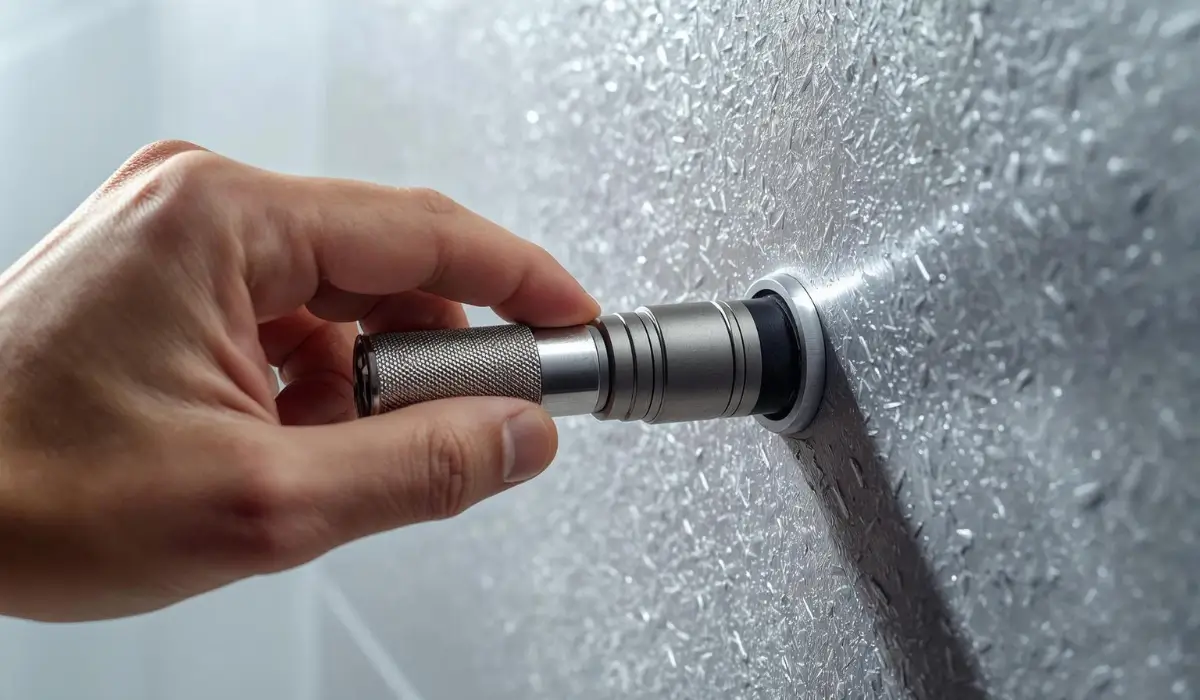
The beauty of a magnetic flashlight is how easy it is to use. Find a metal surface, hold the flashlight against it and feel it click into place with a firm grip. Now you can angle or twist the flashlight to direct the light exactly where you want it. Thanks to the strong neodymium magnets that are often used, the flashlight sits securely even on vertical surfaces or even upside down, giving you enormous flexibility.

The simple assembly makes a led flashlight with magnet invaluable in many situations. Imagine being able to attach the light directly under the hood to check the oil, or on the side of the plug box when a fuse has blown. It is just as convenient to attach it to a metal rack in the garage to illuminate a project. Ease of use is a big reason why a flashlight with magnet has become a must-have in many toolboxes.
flashlight with magnet | brabilligt

Flashlight with magnetic mount, how does it work?

The secret behind a good flashlight with magnetic mount is almost always a neodymium magnet. It is a type of rare earth metal known for its extreme strength relative to its size. This means that even a small and lightweight flashlight can be surprisingly stable. The magnet is usually built into the housing and covered with rubber or plastic to prevent scratching the surface it is attached to.

Placement on metallic surfaces (car, workshop, camping equipment)

The possibilities for placing the lamp are almost endless. Put your rechargeable flashlight with magnet on the body of the car when changing a tire, on the tool cart to light up the workbench, or why not on a steel tent peg when you're camping? It works just as well on the refrigerator door during a power outage as it does on a pipe under the sink during a plumbing job. If you only have a metal surface nearby, you have a place for your lamp.

Combination with hook or stand

Many manufacturers are not satisfied with just one magnet. A modern led flashlight with magnet often come with other smart mounts. A common and much appreciated detail is a fold-out hook. With it, you can hang the lamp from a branch, on a rope or in the hood where there is no metal. Some models also have a standard thread (1/4 inch) at the bottom, so you can mount the lamp on a standard camera tripod for stable lighting at any height.

Range and brightness

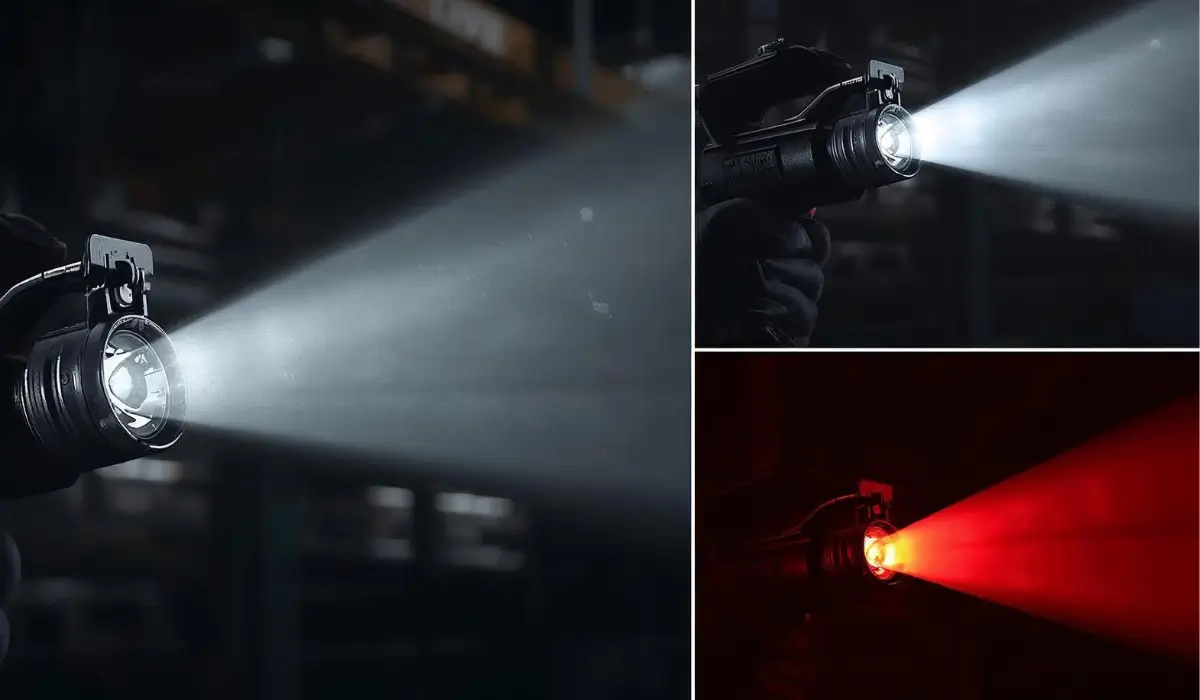
When choosing a flashlight, brightness is (lumen) and range (meters) are two of the most important things to look at. Brightness indicates how much light the lamp provides in total, while range indicates how far the light beam reaches. A flashlight with magnet However, it is usually designed to provide a wide and even working light (floodlight) to illuminate a nearby area, rather than a narrow and long beam of light (spotlight) to see objects at a distance.
flashlight with magnet | brabilligt

Most lights today have more than one light mode. It is common to be able to switch between a bright mode for maximum visibility and a dimmer, more power-efficient mode to extend battery life. Sometimes there are also special modes such as red light, which is good for preserving night vision or as a warning light. A good flashlight with magnetic mount has a smart balance between brightness, spread and battery life to be as practical as possible in real-world situations.

How does the magnetic function affect the range of the light?

The magnet itself does not affect the brightness or range. However, it completely changes how you can use the light. By being able to attach your rechargeable flashlight with magnet In an optimal location, higher up, at a better angle or closer to what you are working on, you will exploit the lamp's full potential. Instead of shaky light from an uncomfortable angle, you will get a stable and constant light source that makes the job easier.

LED flashlight with magnet advantages in practice

Choosing one led flashlight with magnet have several major advantages. First of all, LEDs are incredibly energy efficient compared to old incandescent and halogen bulbs, which gives much longer battery life. Second, they have an extremely long lifespan (often over 50,000 hours), so you practically never need to change a bulb. Finally, they provide a clear and bright light that reproduces colors correctly, which is crucial when, for example, electrical work where you need to be able to see the difference between cables.

Examples of use in dark work environments

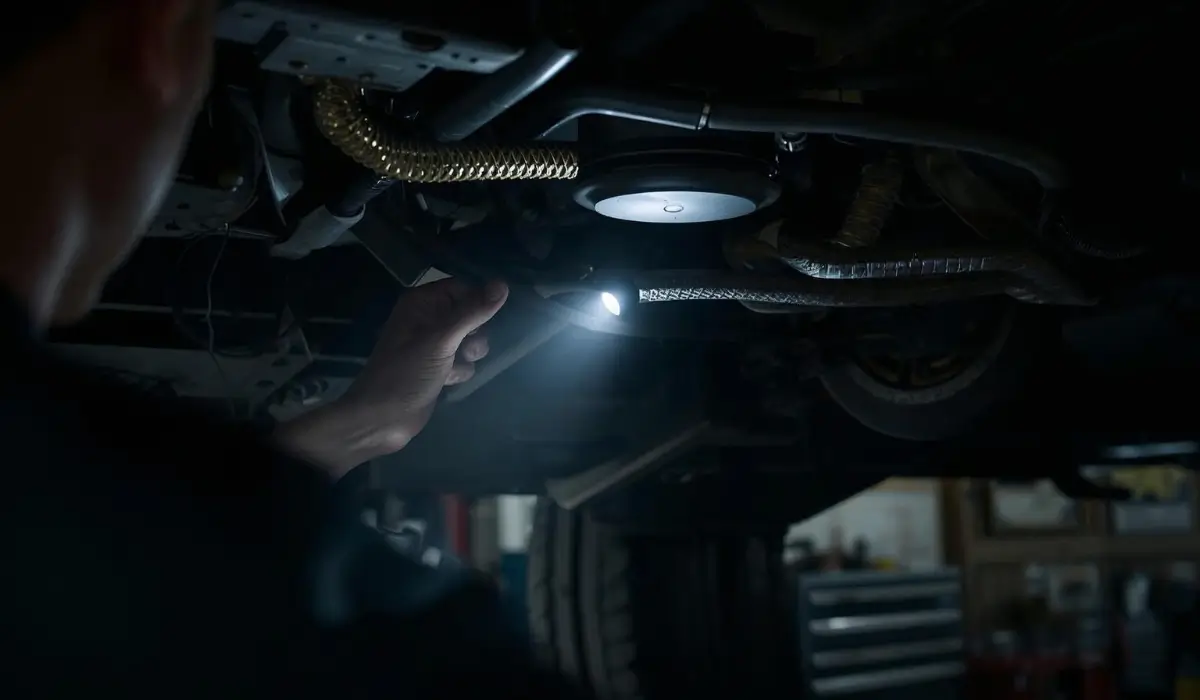
Imagine a plumber working in the narrow, dark space under a sink. With a flashlight with magnet attached to a drain pipe, the entire surface is illuminated and both hands are free for tools and pipes. Or a car mechanic inspecting the undercarriage of a car; the lamp is easily attached to the chassis and provides perfect visibility. These examples clearly show why this type of lamp has become an indispensable tool for so many.

IP rating and durability

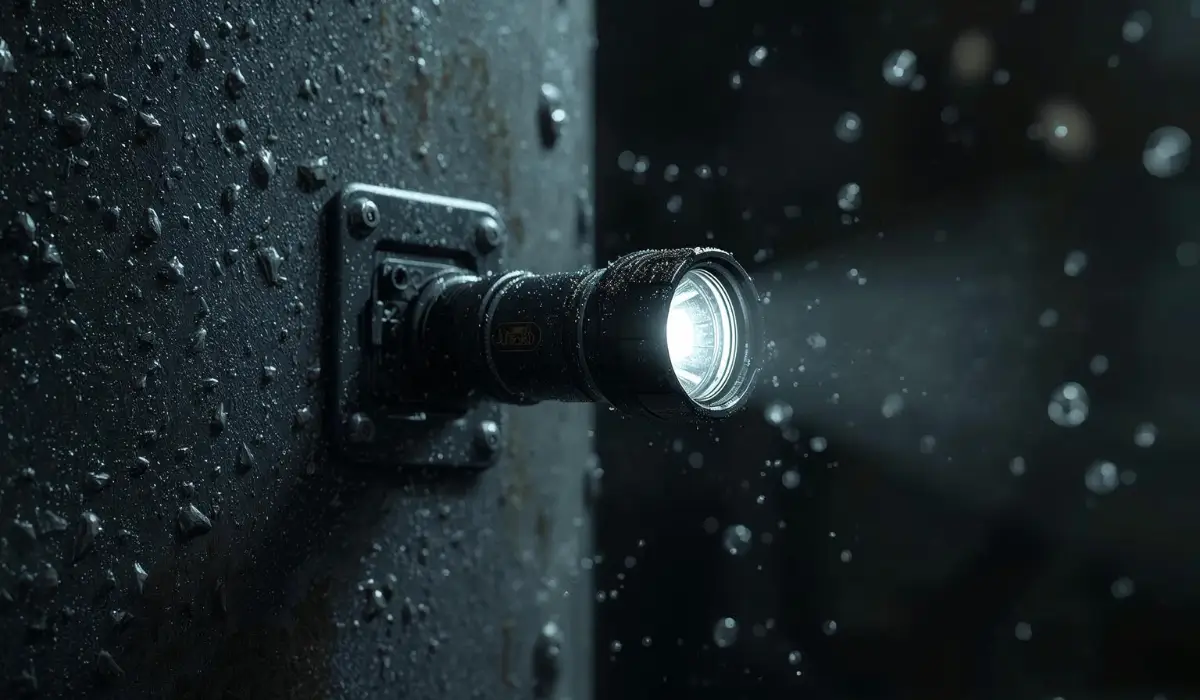
If you use your equipment outdoors or in dusty and humid environments such as workshops, durability is crucial. This is where the IP rating comes in. The IP rating (Ingress Protection) is a standard that shows how well a product's casing protects against dirt, dust and water. A flashlight with magnetic mount with a high IP class is built to withstand tough conditions.

The class is written as “IP” followed by two numbers. The first (0-6) indicates the protection against dust, where 6 is completely dustproof. The second (0-9) shows the protection against water: 4 means it can withstand rain, 7 that it can be immersed in water for a short time and 8 that it can withstand being under water permanently. A robust rechargeable flashlight with magnet for professional use often have a rating such as IP65, IP67 or even IP68.
flashlight with magnet | brabilligt

Common IP ratings for magnetic flashlights

Are you going to use yours the most? led flashlight with magnet indoors in dry environments, such as an emergency light at home, a lower class such as IP44 is often sufficient. It can withstand splashes of water, which is more than enough for most everyday situations. For outdoor use, camping or in damp workshops, you should aim for at least IPX4 (splash-proof). Many quality models have IP65 (dust-proof and splash-proof) or IP67 (dust-proof and waterproof down to 1 meter). More information about the classification can be found at, for example, SEK Swedish Electrical Standard.

Waterproof and dustproof models

A completely waterproof and dustproof flashlight with magnet is a must-have for tradesmen, first responders, hunters and outdoor enthusiasts. These models feature sealed housings with rubber O-rings and protected charging ports to ensure that no dirt, dust or moisture can get in and damage the electronics. They are built to work just as well in a dusty woodworking shop as they do in a downpour.

When is a high IP rating necessary?

A high IP rating (IP65 or higher) is essential when you know that your equipment will be exposed to harsh conditions. If you are going to use your flashlight with magnetic mount For camping, boating, construction or farming, a high rating is smart and cheap insurance. It ensures that the lamp won't let you down when you need it most, regardless of the weather.

Rechargeable magnetic flashlights

The biggest trend in portable lighting is the move to rechargeable models. A rechargeable flashlight with magnet is almost always a smarter choice, both for your wallet and the environment. You avoid the cost and hassle of constantly buying and throwing away disposable batteries.

Convenience also plays a big role. Being able to charge your led flashlight with magnet with a regular USB cable from a power bank, car charger or wall outlet makes it incredibly practical. Many models also have a battery indicator that shows how much power is left, so you don't have to be surprised by a dead battery in the middle of an important job.

Advantages of rechargeable flashlight with magnet

The benefits are obvious: you save money, reduce waste and always have a fully charged lamp ready. A modern flashlight with magnetic mount are also often more powerful than battery-powered versions. This is because the built-in lithium-ion batteries can deliver more power safely, which makes it possible to use stronger LEDs and more advanced features.

Battery types and charging options (USB, magnetic charging)

Most rechargeable flashlights use lithium-ion (Li-ion) batteries, often of the 18650 type, which are known for their high energy density. Charging is usually done via a micro USB or USB C port. USB-C is preferred as it is a more modern and durable standard with a reversible connector. Some premium models of rechargeable flashlight with magnet even has its own magnetic charging cable that snaps into place, an extremely convenient and often waterproof solution.

Uptime and maintenance

Battery life, or operating time, varies greatly depending on the light mode and battery capacity (mAh). A good led flashlight with magnet can shine anywhere from 2-3 hours on its brightest setting to over 10, sometimes even 20, hours on a weaker economy setting. Maintenance is minimal: keep the charging port clean of dirt and charge the battery regularly, even when you are not using the lamp, to extend its lifespan.

Safety and ergonomics

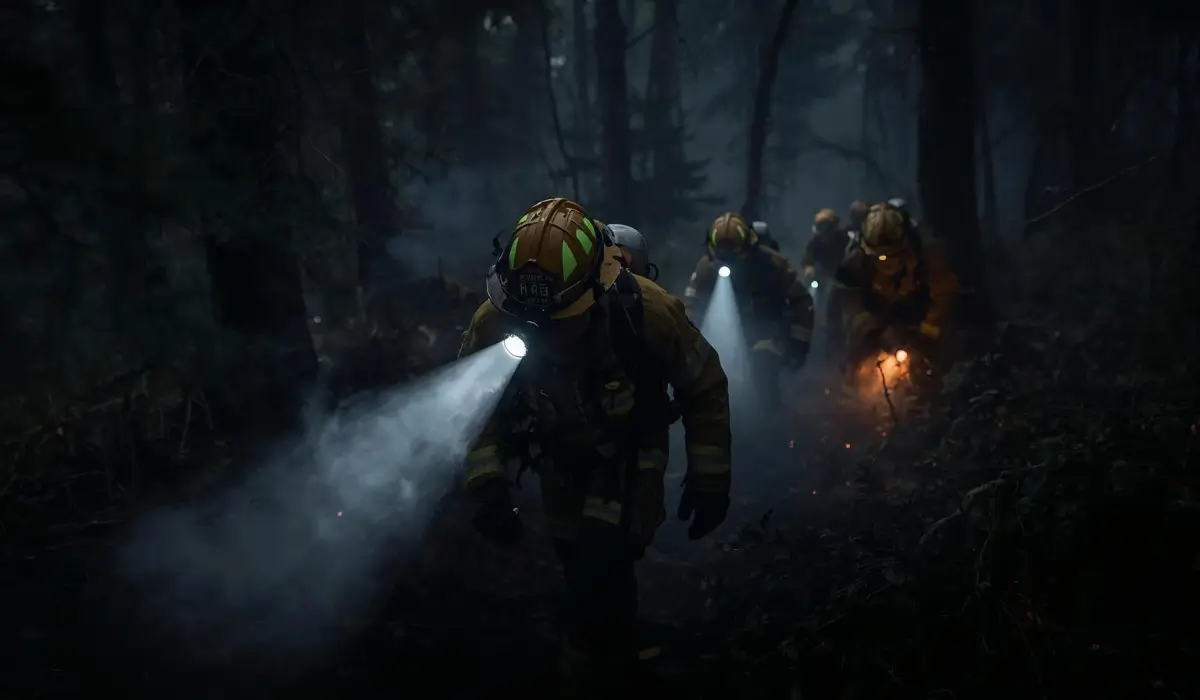
Safety is paramount when working with tools. A flashlight with magnet makes the work environment safer, mainly because it gives you free hands. When you can hold on, carry tools or stabilize what you are working on, the risk of dropping something, tripping or injuring yourself due to poor lighting is reduced.
flashlight with magnet | brabilligt

Ergonomics are also important for a tool that is used frequently. The lamp should be comfortable to hold and easy to operate, even with gloves on. A well-designed flashlight with magnetic mount often has a knurled or rubberized grip and a sturdy construction made of aluminum or impact-resistant plastic that can withstand being dropped. Weight and balance also play a role in ensuring it sits stably on a vertical surface.

Stable mounting without risk of falling

A strong and reliable magnet is essential for safety. Nothing is more annoying or dangerous than a lamp that suddenly comes loose and falls. When choosing a rechargeable flashlight with magnet, make sure that the magnet can handle the lamp's own weight with a good margin, even if the surface is exposed to vibrations.

Materials and child-proof designs

The material affects both durability and feel. Many quality models use anodized aluminum, which is lightweight, resistant to scratches and corrosion, and effectively dissipates heat. If you have children at home, it may be wise to choose an led flashlight with magnet without small loose parts and with a battery compartment that is difficult for little fingers to open.

Battery safety and overheating

Modern lithium-ion batteries are safe, but require built-in protection. A quality lamp always has circuits that prevent overcharging, deep discharging and short circuits. It is also important that a powerful flashlight with magnet have good heat dissipation, often via heat sinks in the design, to prevent overheating that can damage both the LED and the battery. Want to know more about battery safety? The Swedish Civil Contingencies Agency (MSB) good information.

Flashlight with magnet best in test

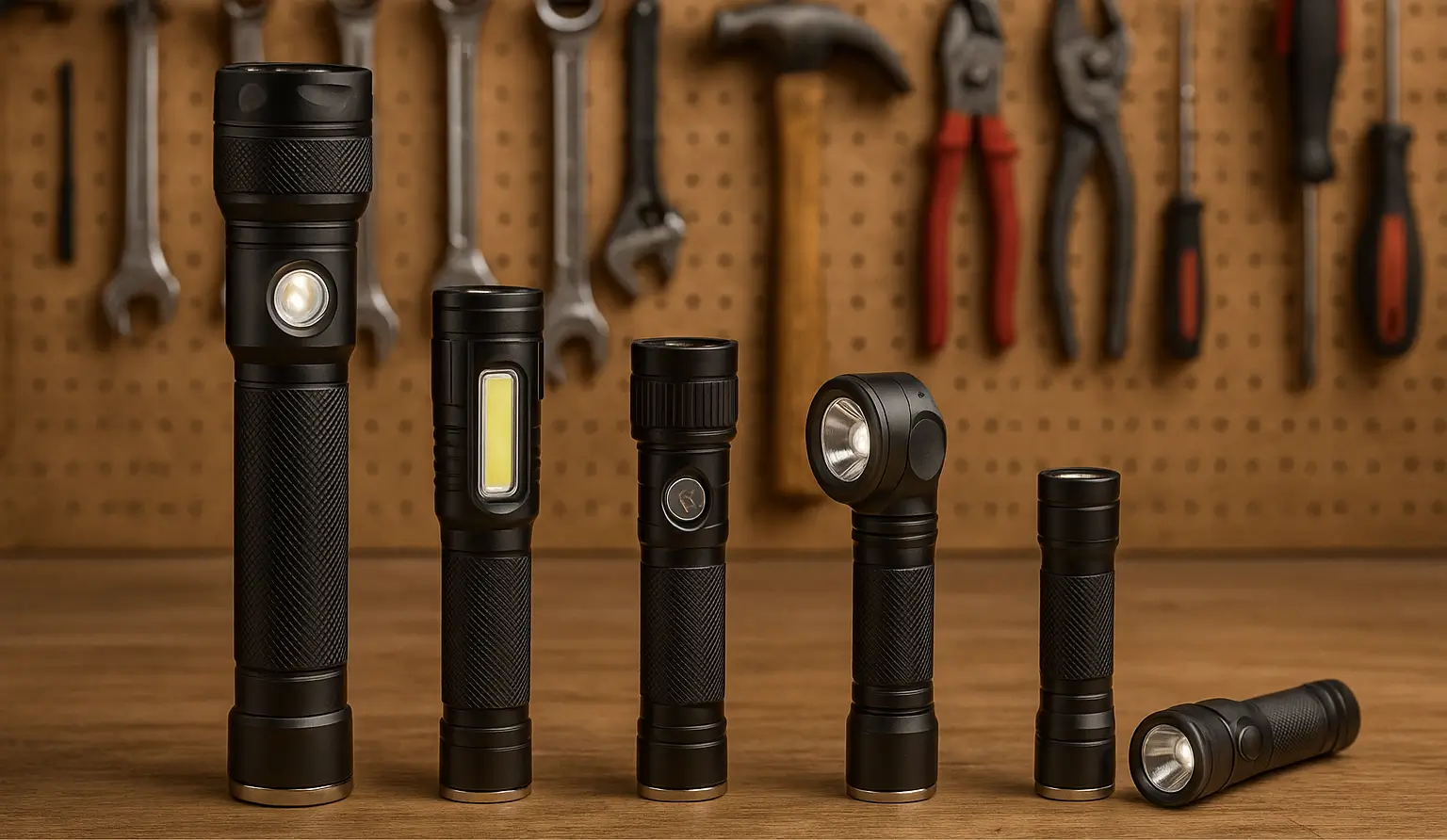
Finding the best magnetic flashlight can be difficult with so many models to choose from. The “best in test” label can be a guide, but it rarely tells the whole story. An assessment is usually about a combination of brightness, battery life, durability, magnetic strength, design and price.

A test winner is rarely the best at everything, but rather offers the best compromise for a particular user. A flashlight with magnetic mount because a car mechanic has different demands on himself than a rechargeable flashlight with magnet for a camper. Therefore, consider your own needs when reading reviews and tests.
Flashlight with magnet best in test

What does “best in test” mean for magnetic flashlights?

In order for a led flashlight with magnet To be called "best in test", it should perform well in several areas. It must have a strong magnet, a robust and water-resistant housing (preferably with a high IP class such as IP67), several practical light modes, good battery life and convenient charging (preferably USB-C). In addition, it should be comfortable to use and provide a lot of performance for the money.

Popular and recommended models 2024–2025

In 2024 and 2025, the trend will continue for compact but powerful lights. Features such as USB-C charging, multiple mounts and LEDs with good color rendering have become standard on the better models. Particularly popular are lights that combine a strong magnet with a pocket clip, a hook and an angled head. Choosing a flashlight with magnet from a well-known brand is often a safe bet, as they have extensive experience in building reliable products.

Affordable options for various uses

You don't have to spend a fortune to get a good magnetic flashlight. There are plenty of affordable options that are great for home use or simple jobs. For the garage, the glove compartment or to keep in the glove compartment, a simple one will do. flashlight with magnetic mount long and provides exceptional value for money.

Areas of use

The versatility of magnetic flashlights makes them useful in a multitude of situations. Whether you're a professional, DIYer, car enthusiast, or outdoorsman, there's sure to be a model to suit you.
flashlight with magnet | brabilligt

En rechargeable flashlight with magnet is a smart investment in convenience and safety. Let's look at some common situations where a led flashlight with magnet really makes a difference.

Garage and car repairs

In the garage, the magnetic flashlight is a real hero. Being able to attach a flashlight with magnet in the engine compartment, on a jack or under the car is a game changer. You get stable light right where you need it and have both hands free to change tires, check fluids or perform other repairs.

Camping and outdoor activities

During a camping trip, a flashlight with magnetic mount be incredibly practical. Attach it to the tailgate of your car when packing in the dark, to the tent pole for lighting inside the tent, or to the camping kitchen when cooking. Many models are small and light enough not to weigh down your pack.

Professional work (craftsman, electrician, rescue service)

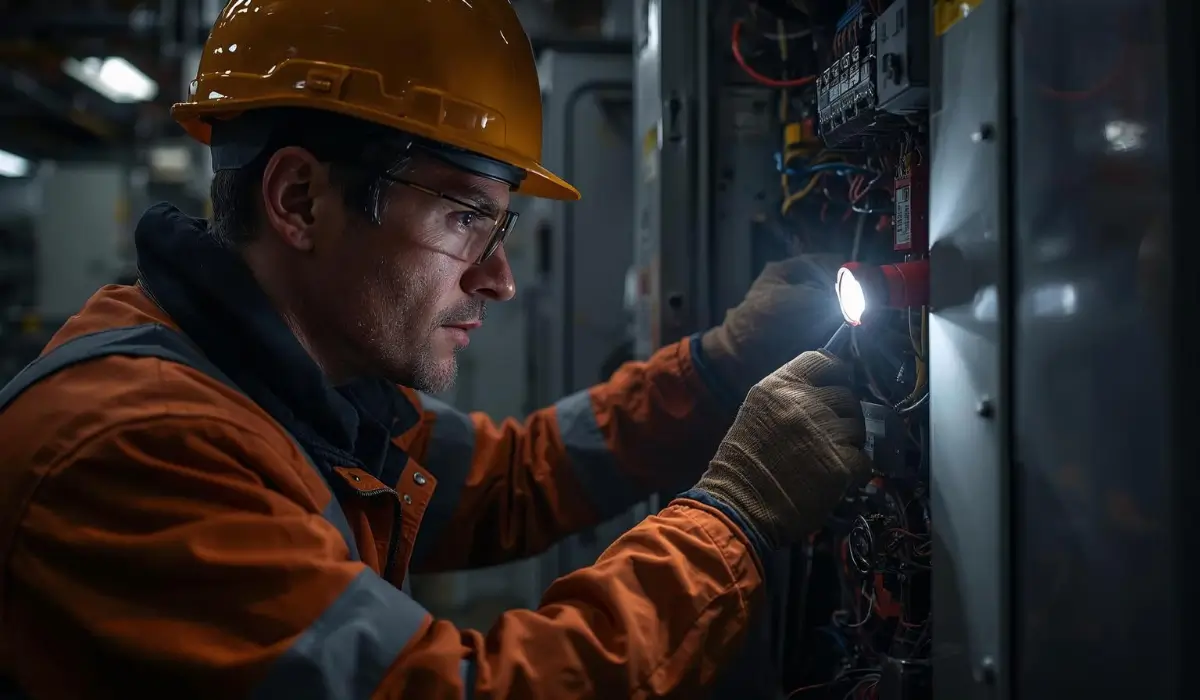
For many professional groups, a rechargeable flashlight with magnet an essential work tool. Electricians attach it to plug cabinets, plumbing installers to pipes and boilers and construction workers to steel studs. For the emergency services, they are invaluable at traffic accidents to quickly illuminate an accident scene. The durability and hands-free function are crucial.

Home and emergencies

A good habit is to have a led flashlight with magnet Attach it to the refrigerator door or in the cupboard. Then you always know where it is in the event of a power outage. It's perfect for looking for things in a dark attic, in a damp basement or for small repairs. In an emergency, a reliable and easily accessible light source is worth its weight in gold.

Buying guide, what should you consider?

Now that you have a handle on the features, it's time to choose the right model. Buying a flashlight with magnet It's all about matching the features of the lamp to your needs. A cheaper model may be perfect for home use, while a professional who uses their equipment daily should invest in a more robust and powerful lamp.

Think about how and where you will use your light. Will it be exposed to rain and dust? Do you need extremely bright light or will a simple work light suffice? Once you have answered these questions, finding the perfect one will be much easier. flashlight with magnetic mount for you.

Magnetic strength and mounting

Make sure the magnet is strong enough for your purposes. A strong magnet will provide a more secure mount. Also consider whether you need additional attachments such as a hook, a clamp or a swivel head. A rechargeable flashlight with magnet with multiple attachment options is always more versatile.

Brightness, range and IP rating

Choose a brightness (lumen) that suits your needs. For close work, 200–500 lumens is often enough, while you may need 1000 lumens or more to illuminate larger areas. A high IP rating is crucial if you are going to use your led flashlight with magnet outdoors, near water or in dusty workshops. IPX4 is a minimum for rain protection.

Battery type, charging and price levels

En flashlight with magnet with a built-in rechargeable battery and USB C charging is the most practical and future-proof choice. Check the stated battery life to ensure it is enough for your activities. Set a budget, but remember that price and quality often go hand in hand, especially when it comes to batteries, durability and water resistance.

Frequently Asked Questions (FAQ)

Here we answer some of the most common questions about magnetic flashlights.

Do magnetic flashlights work on all surfaces? No, they only work on magnetic metals like iron and steel. They will not stick to aluminum, copper, brass, most types of stainless steel, plastic, glass or wood.

Are rechargeable models better than battery-powered ones? For the most part, yes. Rechargeable models are cheaper in the long run, better for the environment, and often have higher performance. However, disposable batteries can be a good backup in emergencies or when you don't have access to electricity.

Which IP class is best for camping? For regular camping, at least IPX4 is recommended. This protects against rain from all directions. If you are near water or are at risk of dropping the lamp in a lake, choose a model with an IPX7 rating, which can withstand being submerged in water for a short time.

How strong a magnet is needed for workshop work? For workshop work, you need a magnet that will securely hold the weight of the lamp, even if it is exposed to vibrations. Look for models with powerful neodymium magnets, preferably with a rubber coating that both protects the surface and prevents the lamp from slipping.

Conclusion

A magnetic flashlight is more than just a source of light; it is a smart tool that simplifies both work and leisure. By giving you light and freeing your hands, it increases safety and efficiency, whether you are a craftsman, car owner or outdoorsman. From robust, waterproof models for professionals to simple and affordable options for the home, there is a perfect magnetic flashlight for everyone.

When choosing, remember to think about what is most important to you: a powerful flashlight with magnetic mount for safe mounting, the right IP class for the environment you are in, and the convenience of a rechargeable flashlight with magnetIf you make a well-thought-out choice, you will not just get a lamp, but a reliable partner that will brighten your life for many years.

flashlight-led | brabilligt.se

Flashlight LED: beam angle, lumens & range

Introduction

A sudden power outage, and the whole house goes pitch black. Maybe you're trying to find something deep in a dark storage room, with only your phone's weak light to help you. In those moments, you realize the value of a really good flashlight. Today, LED technology has completely changed the game, making flashlights more powerful, smarter and more durable than ever. Choosing the right LED flashlight is no longer just about having light, but about having exactly the right kind of light for the right occasion.

Forget about the old incandescent flashlights, their weak yellow glow and battery life that ran out before you could blink. They feel like museum pieces today. Modern LED lights delivers incredible brightness and lasts forever. Everything from a compact yet powerful LED flashlight that you can easily carry in your pocket but can light up your entire garden, to specialized models for hunting and rescue operations. This guide is your shortcut to understanding the most important concepts: lumens, beam angle, color temperature and range. The goal is for you to feel confident in your choice and find a lamp that suits you perfectly.

What is an LED flashlight?

So what really makes an LED flashlight special? Basically, it is a portable, battery-powered lamp that uses light-emitting diodes (LEDs) to create light. Unlike an old-fashioned incandescent bulb, which heats up a brittle metal wire until it glows, an LED works completely differently. It creates light through a smart semiconductor process where electrons release energy in the form of photons, i.e. light. The process is enormously more efficient and the technology is almost completely immune to shocks and vibrations. It is precisely this robust and efficient technology that has made LED flashlights the obvious standard today.

This technological superiority allows manufacturers to build lamps with impressive performance in surprisingly small formats. A modern, powerful LED flashlight does not have to be large and bulky. Thanks to the high efficiency, even small, pocket-friendly models can produce a luminous flux of thousands of lumens while having a battery life of many hours, sometimes even days on the lowest settings. This development has created a whole new world of versatile flashlights, tailored for every conceivable situation.

Technical explanation of LED technology

At the heart of an LED is a small chip, a semiconductor, that creates light in an incredibly clever way. When current passes through the chip, the energy is converted directly into visible light, unlike an incandescent bulb that wastes up to 90% of its energy as heat. This not only makes the LED extremely energy efficient, but also reduces heat generation, a critical factor in modern high-performance lights. Efficiency is one of the main reasons why a best-in-class LED flashlight almost always crushes the competition when it comes to combining brightness with long battery life.

Advantages of LED compared to halogen and incandescent lamps

So why have LEDs taken over completely? The answer is simple: efficiency and durability. The unbeatable energy efficiency means that the batteries last much, much longer. A rechargeable LED flashlight can often run for several hours at maximum power after a single charge, something that was pure fantasy in the past. LEDs are also extremely shock-resistant because they lack fragile filaments or glass parts that can break if you drop the lamp. In addition, they have an almost unimaginable lifespan, often over 50,000 hours. In practical terms, this means that you will never have to change a “light bulb”.

Common uses for LED flashlights

From the kitchen drawer to the police belt, LED flashlights are everywhere these days. A simple and reliable LED flashlight is a must-have in the car, at home in the emergency bag or when you're out with the dog. For the outdoorsman, there are robust, waterproof models for camping, night hiking and climbing. Professionals such as police officers, security guards, tradesmen and emergency personnel rely on specialized, extremely powerful lights as a vital part of their equipment every day to be able to do their jobs safely.

Lumen and brightness

flashlight-led | brabilligt.se

When you look at flashlights, the first word you see is “lumen” (lm). Lumen is simply a measure of how much total light a lamp emits. Think of it as the raw power of the lamp; the higher the number, the more light. But it’s important to understand that lumens aren’t everything. The lamp’s optics, the reflector or lens that shapes the light beam, are just as important to how the light is actually experienced. A poorly designed, powerful 2000-lumen LED flashlight can be worse than a well-built 800-lumen lamp if the light beam is spotty or has too much unnecessary stray light.

It's easy to get caught up in the "lumen wars," where manufacturers boast astronomical numbers. The truth is that different situations require different amounts of light, and more is definitely not always better. A lamp with extremely high lumens draws a lot of power and can be downright blinding at close range. A best-in-class LED flashlight rarely stands out simply by having the most lumens. Rather, it's about a smart balance between maximum power, several usable lower light levels, good heat dissipation, long battery life, and a well-designed, usable beam of light.

How are lumens measured in LED flashlights?

How do you know the numbers on the packaging are correct? Look for the label ANSI/PLATO FL1. This symbol means that the manufacturer has followed a strict, standardized test procedure to measure values ​​such as luminous flux (lumens), range and battery life. It is your guarantee that the figures given are credible and not just inflated advertising figures. The standard is especially important when you are looking at a rechargeable LED flashlight, because you want to know how long the lamp actually delivers a certain brightness on a full charge.

Strong LED flashlight when extra high brightness is needed?

Do you really need a monster lamp with thousands of lumens? For most people, no. A really strong LED flashlight is a special tool that is needed when you have to illuminate huge areas or see details at extremely long distances. Think search and rescue operations, shipping where you need to detect buoys from a distance, or for landowners who monitor large properties. For us ordinary users, an extremely high lumen output can mostly lead to disadvantages such as short battery life and heavy heat generation. Many such lamps can only maintain their maximum setting for a minute or so before they automatically lower the brightness to avoid overheating. Therefore, do not stare blindly at the maximum lumen number on your LED flashlight.

How many lumens are enough in different situations (home, camping, hunting)?

So how much light do you need? It all depends on what you're going to do. Here's some simple guidelines:

  • At home and around the house: For power outages, walking the dog or when searching in the basement, 100-300 lumens is more than enough.
  • Camping and outdoor activities: 300-1000 lumens is a perfect range. Lower levels to avoid disturbing others in the tent, and higher levels to navigate safely in the dark.
  • Hunting and searching: Here a strong LED flashlight of over 1000 lumens may be needed to identify targets and see details at long distances, often over 100-200 meters.

Beam angle and range

flashlight-led | brabilligt.se

A strong lamp is one thing, but where the light actually goes is just as important. This is where beam angle and range come into play. The beam angle describes how wide or narrow the light is spread, while the range (measured in meters) indicates how far the beam reaches before the brightness corresponds to the light from a full moon. The two are related: a narrow beam concentrates the light and provides a long range, while a wide beam illuminates a large area near you but does not reach as far. The choice is all about what you will use the lamp for.

Many modern lights have a clever feature called “zoom” or “focus”, which allows you to adjust the beam angle. It’s an incredibly flexible solution. With a simple hand movement, you can go from a wide, even beam of light to see the path ahead of you, to zoom in to a narrow, intense beam to check out what was rustling in the bushes 200 meters away. A best-in-class LED flashlight with adjustable focus often provides a clean and even beam of light regardless of the setting. Having this feature in a flashlight led rechargeable makes it a true all-rounder.

Narrow vs. wide beam angle

“Spot” and “flood” are two words you will come across. Spot (narrow beam) concentrates all the light into an intense point, perfect for seeing things at a distance, think hunting or inspection work. Flood (wide beam) instead spreads the light out to illuminate a large area in front of you, perfect for walking, working up close or getting a good overview of the campsite. Many people prefer a flashlight LED with a balanced, fixed beam that provides both a strong center point for range and a soft side light for peripheral vision.

How does beam angle affect range?

The connection is simple: the more you concentrate a given amount of light, the further it will reach. Think of a water hose. If you let the water flow freely, you get a wide but short shower. If you put your thumb over the opening, the beam becomes narrower, more intense, and reaches much further. The same principle applies to light. A powerful LED flashlight designed for maximum range (a “thrower”) has a deep, smooth reflector or special optics that effectively collect the light into a razor-sharp beam.

Example of the correct beam angle in practice

A mechanic working under a car needs a wide, even beam (flood) to see the entire work area without blinding spots. A security guard patrolling a large area, on the other hand, needs a narrow beam (spot) with a long range to be able to see what is happening far away. The hiker often wants the best of both worlds, which is why a lamp with either adjustable focus or a well-balanced combination beam is often the model that is named the best LED flashlight in tests for all-round use.

Color temperature in LED flashlights

flashlight-led | brabilligt.se

Have you ever considered that not all “white” light looks the same? Some lights give off a cool, bluish glow, while others give off a warm, yellowish glow. This is called color temperature and is measured in Kelvin (K). It may seem like a small detail, but it has a big impact on how we see colors and details in the dark, and how comfortable the light is for the eyes. Therefore, considering color temperature is an important, but often forgotten, step when choosing a new LED flashlight.

A common misconception is that cooler, bluish light is “stronger” or “better”. Sure, cool white light can be perceived as sharper, but warmer light has several advantages. It reproduces colors more naturally, is easier on the eyes during prolonged use, and penetrates fog, smoke, or rain better. Many experienced users prefer a neutral white light (about 4000-5000K) as a perfect compromise. A modern rechargeable LED flashlight can sometimes be found in different color temperature options, although this is more common on more niche models.

Cool white vs warm white light

Cool white light (over 5000K) has a bluish tone and is often perceived as very bright and “modern”. It is good for creating contrast and can give a sense of sharpness. Warm white light (under 4000K) is similar to the glow from an old incandescent lamp. It is softer on the eyes and reproduces colors, especially skin tones and natural colors, much more realistically. A strong LED flashlight with a very cool white light can create dazzling reflections on wet surfaces or snow, while a warm white light provides a calmer lighting.

When should you choose which color temperature?

Choose cool white light when you want maximum perceived brightness and sharp contrast, for example for technical work or inspections. Choose warm white or, even better, neutral white light for general outdoor activities, nature photography or other situations where accurate color reproduction and eye comfort are important. It is also a superior choice in poor visibility such as fog or rain, as the blue in cool white light is reflected more by water particles and dazzles you. Finding a best LED flashlight in the test is therefore also about finding a model with a color temperature that suits your activities.

The importance of eye comfort and visibility

A light with a high color rendering index (CRI) and a comfortable, neutral color temperature makes a big difference to your eyes during prolonged use. Cool white light with a low CRI can make colors look “washed out” or inaccurate and can cause more glare, making it harder for your eyes to adjust back to the dark. For professionals who work long shifts in the dark, or for hikers, a rechargeable LED flashlight with a high CRI, neutral white light is often the safest and most comfortable choice to avoid eye strain and headaches.

Batteries and charging options

flashlight-led | brabilligt.se

Without power, the best flashlight is just a paperweight. The heart of any portable light is its power source. Even though LED technology is super efficient, a powerful LED flashlight that delivers thousands of lumens still requires a lot of energy. The choice is usually between regular disposable batteries and rechargeable batteries, and both have their pros and cons depending on how you plan to use your LED flashlight.

Rechargeable lithium-ion batteries (often 18650 or the newer, more powerful 21700) have become standard in almost all high-performance flashlights. They pack a lot of power into a small package, perform well in the cold, and can be recharged hundreds of times, making them the cheapest and most environmentally friendly in the long run. Another big advantage is that many modern flashlights have built-in USB C charging. This makes it incredibly easy to charge them anywhere from a power bank, in the car, or from a wall outlet without having to lug around a separate charger.

Regular batteries for LED flashlights

The most common battery types are:

  • Disposable batteries (Alkaline/Lithium): AA, AAA and CR123A. The advantage is that they are available everywhere, which makes them good as a spare. The disadvantage is that they become expensive in the long run and perform poorly in really strong lights.
  • Rechargeable NiMH: Often in AA and AAA sizes. A better alternative to disposable batteries for less demanding lights, but they don't beat lithium-ion.
  • Rechargeable Lithium-ion (Li-ion): Types like 18650 and 21700 are the obvious choice for high performance. They offer the best capacity and power and are standard in almost every model that is named the best LED flashlight in test.

Flashlight LED rechargeable advantages and disadvantages

The advantages of a rechargeable LED flashlight are clear: it is much cheaper to operate and more convenient in everyday life. You avoid the cost and hassle of constantly buying new batteries and can charge it with the same cable as your mobile phone. The disadvantage? You are dependent on a power source to charge. If you are out on a multi-day hike, this can be a problem. However, the solution is simple: bring a power bank or an extra, fully charged battery to swap with.

Tips for longer operating time

Want to get the most out of your batteries? Never use a brighter light setting than you need. Most lights have an ultra-low “moonlight” setting that can give you hundreds of hours of battery life, perfect for reading in a tent. Keep your light and batteries cool, as extreme heat or cold can damage them. Also, use the light’s lock feature when you pack it to prevent it from accidentally turning on and draining its battery. This will help your flashlight last longer.

LED flashlight best in test

flashlight-led | brabilligt.se

Is there a flashlight that is “best in test” for everyone? The answer is a clear no. The “best” flashlight for a hunter is not necessarily the best for an electrician. When a model is named the best LED flashlight in test in a certain category, it is based on an overall assessment of brightness, battery life, build quality, features and value for money.

Instead of just looking for a "test winner" logo, it's smarter to understand what characterizes a good lamp. Go for established manufacturers (like Fenix, Nitecore, Olight, Petzl) that are known for high quality and good service. A suspiciously cheap strong LED flashlight from an unknown brand may attract with high lumens, but it often comes at the expense of poor battery life, non-existent heat management and a short lifespan.

What does best in a test mean?

A “best in test” stamp shows that a product has performed exceptionally well compared to others. Serious tests evaluate both measurable data (actual lumens, range, battery life) according to the ANSI standard and more subjective things such as ergonomics, the quality of the light pattern and how easy the lamp is to use. For a rechargeable LED flashlight, charging time and battery quality are also tested. A winner is simply a product that delivers a superior overall experience.

Recommended models 2024–2025

In 2024 and 2025, the trend towards increasingly compact yet extremely powerful lights will continue. Many are using the newer 21700 batteries to combine high power with long runtime, and USB C charging has become standard. Another trend is an increased demand for LEDs with high CRI for better color rendering. When choosing a new LED flashlight, look for these modern features that are a sign that you are getting the latest and most efficient technology.

Affordable options for different needs

You don't have to break the bank to get a really good flashlight. There are plenty of affordable options that offer a lot of performance for the money, especially if you can do without the very highest lumens. A smaller but still powerful LED flashlight with around 1000–1500 lumens and built-in USB charging can often be found for under a thousand kroner and is more than enough for most home users and outdoor enthusiasts.

Areas of use

A modern LED flashlight is an incredibly versatile tool. It can be a lifesaver in an emergency, an indispensable tool at work and a faithful companion in your free time. Different situations place completely different demands on the characteristics of the flashlight - waterproofness, shock resistance, size, weight and light pattern. A flashlight that is named the best LED flashlight in a test for caving is probably a lousy choice for someone who just wants a small flashlight on their keychain.

The key to a successful purchase is to consider what you need. A home light doesn't have to be as extremely robust as a professional one, but a rechargeable LED flashlight is almost always a convenient and smart choice. Let's look at some common situations and what you should look for.

LED flashlight for camping and outdoor activities

For camping and hiking, a versatile LED flashlight with multiple light modes is a must. A very low “moonlight” mode is perfect for reading or rummaging through your tent’s gear without ruining your night vision. A stronger mode of several hundred lumens is needed to safely navigate trails in the dark. Waterproofing is a must. Smart features like a magnetic back or a loop to hang the light like a lantern are incredibly practical.

LED flashlight for hunting and fishing

Hunters and fishermen need an extremely robust and fully waterproof lamp. A strong LED flashlight with a very long range (high candela) is essential for tracking animals or seeing across dark water. Many hunters also prefer models with colored light, especially red light, which preserves night vision and is less disturbing to animals. Easy operation, even with gloves, is another important feature.

LED flashlight for home and emergencies

Every home should have at least one reliable flashlight, easily accessible in case of a power outage. It doesn't have to be super bright, but it needs to be reliable. A best-in-class LED flashlight for home use is often a model that is extremely easy to use and can be relied on when it really matters. According to MSB recommendations, a flashlight with batteries is a central part of a basic home emergency preparedness kit.

LED flashlight for professional use (police, craftsmen, rescue services)

The absolute highest demands are made here. Professional users need extreme shock resistance, rock-solid reliability and often tactical features such as direct access to a disorienting strobe light. A rechargeable LED flashlight is a requirement to keep operating costs down in daily use. For electricians, a high CRI value is important to be able to distinguish color-coded cables. These lights are built to perform in the toughest environments, day in and day out.

Buying guide, what should you consider?

Okay, that's a lot to consider. So how do you choose the right one in this jungle of flashlights? By breaking down the decision into a few simple steps, you can quickly narrow down which type of LED flashlight is right for you. First and foremost, think honestly about your main use: short dog walks, advanced car repairs, long mountain hikes, or as part of your emergency kit?

Once you know what you need, you can start reviewing the features. As we said, don't blindly stare at the highest lumen count. A powerful LED flashlight is only useful if it has a practical light pattern, reasonable battery life, and a sturdy construction. Quality almost always pays off, and a well-built flashlight from a reputable brand will be a faithful companion for many years to come.

Brightness and lumens

Determine how much light you actually need for your normal use. For most people, 500-1500 lumens is plenty. Remember that the best LED flashlight in a test is not the one with the most lumens, but the one with the best balance between brightness, efficiency and usability.

Beam angle and range

Do you need to shine far (throw) or wide (flood)? An adjustable beam (zoom) provides flexibility, but often at the expense of waterproofness. If you choose one with a fixed beam, consider whether you prioritize range or overview. For all-round use, a rechargeable LED flashlight with a balanced combination beam is a safe bet.

Battery type and charging options

Rechargeable is the modern and convenient choice for most people. A flashlight LED with built-in USB C charging is preferable. If you are often far from the mains, make sure to have a plan for charging via power bank or extra batteries.

Brands, quality and warranty

Go for well-known brands that are known for their high quality and reliable warranties. A more expensive lamp is often a better investment in the long run. Check the material (aircraft aluminum is standard), IP rating for water resistance and that the lens is made of tempered glass. A strong, high-quality LED flashlight is built to last.

Frequently Asked Questions (FAQ)

Here we answer some of the most frequently asked questions about LED flashlights. The goal is to dispel some myths and help you make a safer and more informed choice.

A common question is whether a best-in-class LED flashlight is really worth its higher price. The answer is in most cases a resounding yes. The price reflects the quality of everything from the LED chip and electronics to the lens and battery. A cheap rechargeable LED flashlight may attract with high numbers but risks stopping working after a few charges, while a quality model will last for years of hard use.

Are more lumens always better? Absolutely not. More lumens means higher battery consumption and enormous heat generation. For close-up use, too many lumens can be downright blinding. A balanced lamp with several well-balanced light modes is almost always a better choice.

What color temperature is best for camping? A neutral white (around 4000-5000K) or warm white (below 4000K) light is usually preferable. It provides more natural color reproduction, is more pleasant on the eyes, and penetrates fog and rain better.

Are rechargeable LED flashlights better than those with disposable batteries? For the vast majority, yes. A rechargeable LED flashlight is cheaper to run, better for the environment, and more convenient. However, for long expeditions without electricity, a flashlight powered by regular batteries (such as lithium AA) can be a good backup.

How long does an LED bulb last? The LED itself in a quality bulb has a specified lifespan of 50,000 hours or more. This means that in theory it can last over 45 years if you use it 3 hours every day. In practice, it is usually other parts, such as the battery or the switch, that give up long before the LED itself.

Conclusion

So, now you have the tools. You know what lumens, beam angle and color temperature mean in practice. Choosing the right LED flashlight is a trade-off between brightness, light pattern, light quality and power supply. By considering your own needs, you can be sure to find a lamp that will be a reliable tool you can rely on in all situations.

Whether you're looking for a small flashlight for your keychain, an extremely powerful LED flashlight for work, or a rugged model for your next outdoor adventure, there's bound to be a perfect match for you. Remember, a good flashlight is not an expense, but a long-term investment in your safety and comfort. To explore and find the perfect model for you, check out our full range of high-quality LED flashlights. Good luck with your choice

rechargeable flashlight | brabilligt

Rechargeable flashlight: battery types & charging

Introduction

We've all been there. The power goes out, you frantically search for your flashlight, and when you finally find it... the batteries are dead. It's a classic and deeply frustrating situation. But there's a modern, reliable, and smarter solution: a flashlight rechargeable. Instead of constantly hunting for new disposable batteries, you simply charge it just like your mobile phone. It gives you the peace of mind of knowing that it is always ready when you need it. Switching to a rechargeable model is not only smart for your emergency preparedness, it is also a wise choice for both your wallet and the environment in the long run. You simply avoid those constant small purchases.

Battery types in rechargeable flashlights

Forget everything else for a second, the battery is the most important thing in a flashlight rechargeable. It's the motor that drives everything. The battery in the lamp affects everything: how bright it shines, how long it lasts, how much it weighs and how it feels in the hand. Development has been rapid, and today's rechargeable batteries are light years better than the old tired versions from the past. Now it's almost exclusively lithium-ion (Li-ion), a technology that is an expert at packing lots of energy into a small area. It's thanks to this that we can have flashlights that are both incredibly powerful and surprisingly small.

Having a little knowledge of the different battery types will help you find the right one. rechargeable flashlight best in test the model that actually suits you. Are you looking for maximum brightness to be able to search an entire field, or a faithful servant that lights up for several days on low power during a camping trip? Some batteries are made for short, intense discharges, others for long and tough endurance. By understanding the differences, you ensure that you are not only buying a lamp that shines brightly, but one that you can rely on for many years to come.

Common battery types (18650, 21700, AA/AAA rechargeable)

rechargeable flashlight | brabilligt

When you look at a modern, high-performance rechargeable flashlight you'll see three names over and over again: 18650, 21700 and the good old AA/AAA in rechargeable form. The 18650 has long been the king of the pack, a powerhouse (approx. 18mm x 65mm) that offers the perfect balance between size and power. But recently its big brother, the 21700 battery (approx. 21mm x 70mm), has been taking up more and more space.

It's a little bigger but holds significantly more juice, making flashlights that burn brighter and last longer. Finally, we have the rechargeable AA/AAA batteries, usually the NiMH type. Their strength is that they're so common and versatile, but they simply can't match the raw power of lithium-ion batteries.

Advantages and disadvantages of different battery types

This is a classic compromise. If you choose a light with an 18650 or 21700 battery, you get brutal brightness and long runtimes. That's why these batteries are in almost every model that is named rechargeable flashlight best in test. The downside? You can't just throw in a pair of regular Duracells when the crisis hits. The rechargeable AA/AAA batteries instead give you total freedom. They're everywhere and fit in lots of other gadgets. But you have to sacrifice that real top performance and runtime at high settings. The question is what's more important to you: superior power or unbeatable flexibility?

Lifespan and capacity

How long a flashlight lasts is a matter of battery capacity, which is measured in milliampere hours (mAh). Think of it like the size of a tank - the higher the mAh, the more fuel. A flashlight rechargeable of high quality with an 18650 battery is today between 2600 and 3600 mAh. A 21700 battery can boast a full 4000–5000 mAh. The lifespan of the battery itself is measured in charge cycles. Most good lithium-ion batteries can handle around 300–500 full charges (from empty to full) before they start to lose their sting. So with a little care, you have a battery that performs at its best for several years.

Charging methods

Now for what is perhaps the greatest luxury of a modern flashlight rechargeable: the charging itself. Forget the days when you had to fiddle with batteries and plug them into a clunky wall charger. Today, almost every decent flashlight has a built-in charging port. It makes everything incredibly easier. Whether you have a power bank, a computer, a car charger, or a regular wall outlet nearby, you can give your light new energy.

Technology has given us several smart and convenient solutions. Everything from the universal USB-C port to waterproof magnetic connectors. A rechargeable flashlight best in test often have a charging method that is both fast, safe and ready for tough times. How the light is charged can even affect how waterproof and durable it is in the long run, so it's a detail worth looking into.

USB charging (micro-USB, USB-C)

The most common method for charging a flashlight rechargeable is via USB. Older and cheaper models often use a micro-USB port. It works, but can be a bit tricky to get right. Newer, sharper flashlights have almost always switched to the modern USB-C standard. The advantages of USB-C are obvious: it's not only faster, it's also reversible (no more wrong-way plugs in the dark!) and probably uses the same cable as your phone or laptop. Fewer cables to keep track of, simply put.

Magnetic charging

If you see a flashlight with magnetic charging, you're probably looking at a premium model. And there's a good reason for that. Instead of an open port with a rubber flap, the flashlight has a magnetic contact point. The charging cable clicks into place, quickly and securely. Not only is this incredibly convenient in the dark or with gloves on, it also creates a completely sealed and waterproof unit. A flashlight with magnetic charging therefore often has a higher IP rating and is less sensitive to dirt and moisture. A common feature of a rechargeable flashlight best in test.

Docking stations and external chargers

For professionals like police officers and security guards, or for the true enthusiast and more rechargeable flashlight, a docking station is worth its weight in gold. The lamp is simply placed in its holder, which is connected to the power supply in the car or at the station. Then the flashlight is guaranteed to always be fully charged and ready. External chargers are still super relevant. They allow you to charge extra batteries on the side, so that you can switch from an empty to a full battery in a flash. Invaluable during long work shifts or when you are out in nature without access to electricity.

Uptime and performance

Uptime is one of the first things you look at when choosing a flashlight rechargeable. It is simply the time the lamp can shine on a single charge. Manufacturers are usually good at specifying the operating time for each light mode, from the dim “mysleek” light that can last for weeks, to the brutal “turbo” mode that may only last a few minutes before the lamp automatically steps down in brightness to protect itself from overheating.

The performance of rechargeable flashlight However, it's about more than just maxed out lumens. A really good flashlight has smart electronics that regulate the power and ensure that the light doesn't just die out when the battery starts to run out. Instead, it dims the light gradually, giving you plenty of time to find the charger. Many models also have a smart little battery indicator, often an LED that changes color from green to red, so you always know how much power is left.

How long does a fully charged battery last?

This depends entirely on how you use your flashlight rechargeable. On a really low setting, perhaps 10-50 lumens, a modern lamp with a good 18650 battery can shine for several days straight. Perfect for reading in the tent or as night lighting at the campsite. On the other hand, if you turn it on at a strong setting around 1000 lumens, you can expect the battery to last for 1,5 to 3 hours. The extreme turbo modes are intended for short, intense needs such as illuminating something from a distance – and rarely last more than a minute before the lamp itself lowers the brightness to manage the heat.

Factors affecting operating time (lumen, location, temperature)

rechargeable flashlight | brabilligt

Several things affect how long the battery actually lasts. The most obvious is the brightness - more lumens consume more battery. Special modes like strobe also draw a lot of power. One factor many forget is the cold. Lithium-ion batteries are not big fans of sub-zero temperatures. The chemical process in them becomes slower, which results in poorer performance and shorter operating time. A rechargeable flashlight best in test often have higher quality electronics and batteries that handle cold better than cheaper alternatives.

Tips for extending battery life

There are many things you can do to get more time out of each charge. The golden rule is simple: don't use more light than you need. Don't drive at maximum power unnecessarily. Store the light at room temperature and avoid leaving it in a hot or cold car. If you know that the flashlight won't be used for a while, it's best to store the battery with about 50% charge. This is the level at which lithium-ion batteries thrive best during long-term storage. With these little tricks, you can maximize both the battery's performance and the lifespan of your rechargeable flashlight best in test.

Safety during charging and use

First of all: a modern flashlight from a well-known brand is a safe product. But we are still talking about powerful batteries, so a little common sense never hurts. Lithium-ion batteries store a lot of energy, and if they are damaged or handled incorrectly, in rare cases there can be risks such as overheating or short circuits. A quality flashlight rechargeable However, batteries from a reputable manufacturer always have several protection circuits designed to prevent just this, such as protection against overcharging and short circuiting.

Choosing a flashlight from a well-known brand is the easiest insurance you can give yourself. The major manufacturers invest enormous resources in testing and safety certifications. This means that a rechargeable flashlight best in test is not only strong and smart, but also built with your safety in mind. For more general advice about batteries, the Swedish Electrical Safety Authority's website is a good resource.

Overheating and fire safety

The biggest risk with really powerful flashlights is heat. A modern flashlight rechargeable almost always have a built-in “heat guard” (often called ATR Advanced Temperature Regulation). A sensor detects when the lamp gets too hot and automatically lowers the brightness slightly until it has cooled down. This is an incredibly important feature, especially on the turbo modes. When charging, remember to never place the flashlight on anything flammable like a couch or bed. A hard, non-flammable surface like a table or floor is always the safest choice.

Proper charging routine and monitoring

Always use the cord that came with the flashlight, or another high-quality cord. While it is safe to charge modern rechargeable flashlight overnight thanks to built-in protections, it's a good habit not to leave electronics charging completely unattended for ages. A good trick is to charge the lamp when you're home and awake. Unplug the cord when it's fully charged, and you're on the safe side and at the same time save the battery.

Storage of rechargeable flashlights and batteries

How to store your flashlight rechargeable plays a role in both safety and battery life. If it is going to be unused for several months, make sure the battery is about half charged (40-60%). Then store it in a cool, dry place, away from direct sunlight. Many flashlights have a “lockout mode” that you can activate. This cuts off the power completely, so that the light cannot be turned on accidentally in the pack – an ingenious feature that is both safe and saves battery life.

Rechargeable flashlight best in test

rechargeable flashlight | brabilligt

The “best in test” label can be both helpful and confusing. Because there is rarely a single flashlight that is the best at everything for everyone. When a model receives this award, it has usually performed best in an overall assessment of brightness, range, battery life, quality, water resistance and features. It simply offers the best overall package in its specific category, such as “Compact EDC” or “Budget Choice.”

Remember that the best rechargeable flashlight for a police officer, who needs extreme range, is not the same as the best lamp for a camper, who wants a wide and soft light with a long battery life. When reading reviews, don't blindly stare at the highest lumen count. Instead, think about what features are most important to you and how you will use your lamp. A reliable and user-friendly flashlight rechargeable is often a much better buy than a technically superior but clumsy and complicated model.

What does best mean in tests for rechargeable models?

When it comes to a flashlight rechargeable "Best in Test" reviews place extra emphasis on the battery and charging. How fast can it charge? Does it have a modern USB-C port or a convenient magnetic connector? How well does the battery hold a charge when not in use? In addition, the build quality is A and O, is it made of durable aluminum and can it be submerged in water (IP68 rating)? A winner delivers a reliable and user-friendly experience from start to finish.

Popular recommended flashlights 2024–2025

In 2024 and 2025, the trend of flashlights that are smaller but more powerful than ever will continue. The boundaries of what is possible are constantly being pushed. Well-known brands such as Fenix, Nitecore, Olight and Ledlenser are leading the way with their innovative models. Many of their most recommended rechargeable flashlight now have features like magnetic charging, clear battery indicators, and USB-C as standard. Some can even double as a power bank and charge your phone in an emergency.

Affordable options for different needs (camping, work, everyday life)

You don't have to empty your savings account to get a really good flashlight. For regular home use and as part of your emergency kit, a compact flashlight rechargeable at 1000–1500 lumens is a perfect and affordable choice. If you are going camping, a model with extra long battery life on low settings and perhaps a red light (to preserve night vision) may be worth looking at. For work, it is durability, a good mount and easy handling with one hand that matters.

Uses for rechargeable flashlights

A modern flashlight rechargeable are so much more than just a source of light for power outages. They are a versatile tool that has become an indispensable gadget for a multitude of activities, both at work and in leisure. Their robust design, impressive performance and smart features make them useful in countless situations. But different tasks have completely different requirements, which is why there is such a huge variety on the market.

From the darkest woods on a night hike to the cramped engine compartment under the hood of a car, the right flashlight makes the job easier and safer. A model that ranks as rechargeable flashlight best in test A hunting flashlight might have an extremely focused beam of light to see details from afar, while a good camping flashlight has a wide, soft beam that illuminates the entire camp. Understanding these differences is key to choosing the right tool for the job.

Flashlight for camping and outdoor activities

rechargeable flashlight | brabilligt

For camping and outdoor activities, versatility is king. A really low “moonlight” position for the tent, a middle position for fixing food, and a high position for checking out what was rustling in the bushes. A rechargeable flashlight best in test for this purpose is always waterproof (at least IPX7), shockproof and has a really long battery life on the lower settings. A wide light (flood) is usually more practical than a narrow beam of light (spot) for most camping tasks.

Flashlight for hunting and fishing

Hunters and fishermen who are out at dawn and dusk often need a flashlight rechargeable with extreme range. A narrow, focused and powerful beam of light is ideal for identifying animals or landmarks from a long distance. Many hunters also want to be able to use colored filters (red or green light) that do not scare the game as much and that preserve their own night vision better. That the lamp is robust and waterproof is a matter of course.

Flashlight for home and emergencies

At home and in the emergency kit, there is one thing that is more important than anything else: reliability. You need to be able to trust that the light will work when you need it most. A medium-power, easy-to-use rechargeable flashlight with simple buttons and a clear battery indicator is a safe and good choice. Place it in a given place in the hall, kitchen drawer or by the bed - and make sure it is charged, and you will always be ready.

Professional use (police, rescue, craftsmen)

Professionals in the police, emergency services and crafts professions have the highest demands. A flashlight rechargeable For these users, a flashlight must be virtually indestructible, 100% reliable and easy to handle under pressure. Features such as a tactical button on the back for quick light, a blinding strobe mode and a powerful magnet or a sturdy belt clip are often a must. Here, a more expensive flashlight from a well-known brand is not a luxury, but a pure necessity to be able to do your job safely.

Buying guide – what should you consider?

Diving into the flashlight jungle can feel overwhelming. With hundreds of models, brands, and technical terms, it's easy to get confused. But by focusing on a few key points, you can easily find a flashlight rechargeable that is perfect for you and your wallet. Think of this guide as a checklist to ask yourself the right questions.

Start by thinking about what you actually should have the lamp on. Is it for walking the dog, for tough adventures in the wilderness or for daily use at work? The answer to that question directly determines which features are most important. A good rechargeable flashlight is an investment in safety and comfort, so it pays to make a well-considered choice.

Capacity and charging speed

Check the battery capacity (mAh) to get an idea of ​​the operating time. To assess the charging speed, see if the lamp has a modern USB-C port - it is almost always faster than the old micro-USB standard. A rechargeable flashlight best in test usually has a good balance between high battery capacity and fast charging, so you don't have to wait unnecessarily.

IP rating and durability

The IP rating indicates how well the lamp is resistant to dust and water. The number 6 in IP68 means it is completely dustproof. The number 8 in IP68 means that it can be submerged in water. This is crucial for all outdoor use. Durability is about material (often aircraft aluminum) and construction. A quality lamp should withstand a drop from at least one meter without any problems. A flashlight rechargeable that will be taken out into the woods and fields must be durable.

Brands, warranties and price levels

rechargeable flashlight | brabilligt

Choosing one flashlight from a well-known brand like Fenix, Olight or Nitecore often cost a little more, but you usually get a lot for your money: higher quality, better warranties and access to support and spare parts. The price reflects the performance, features and quality. A cheaper rechargeable flashlight best in test may be more than enough for home use, but for demanding situations where reliability is everything, it's wise to invest a little more.

Frequently Asked Questions (FAQ)

How long does it take to charge a flashlight? It all depends on the battery size (mAh) and the power of the charger. As a rule of thumb, you can expect 3-5 hours to charge a typical flashlight rechargeable with an 18650 battery and USB-C from empty to full.

Which battery is best for a rechargeable flashlight? For the most power and performance, the 18650 or the slightly larger 21700 lithium-ion battery is the obvious choice. However, if you prioritize flexibility and want to be able to use regular batteries in an emergency, rechargeable AA (NiMH) batteries can be a good option.

Is it dangerous to leave a rechargeable flashlight on charge? No, not with modern quality lights. They have built-in protection that turns off charging when the battery is full. But as a general safety rule, it's always best to charge on a hard, non-flammable surface and not leave charging gadgets unattended unnecessarily.

Do rechargeable flashlights last longer than regular ones? Yes, by all means. The lamp itself and the LED chip have a lifespan of tens of thousands of hours. The rechargeable battery can be reused hundreds of times, making it a hugely cheaper option in the long run than constantly buying new disposable batteries.

Conclusion

So, to wrap things up: Getting a good flashlight rechargeable is one of the smartest purchases you can make. You get a powerful and reliable light source that is ready for any adventure, job or sudden power outage. By understanding the basics of batteries, charging and features, you can confidently choose the model that is perfect for you. Whether you need a small lamp for the pocket, a rugged workhorse for the garage or a light monster for the expedition, there's a rechargeable model waiting for you. Say goodbye to the frustration of dead batteries and welcome the convenience of a modern and reliable flashlight.

flashlight children | brabilligt

Flashlight for children: safety, brightness & batteries

Introduction

For a child, having their own flashlight is pure magic. It's so much more than just a gadget that lights up; it's a ticket to adventure, a safe companion in the dark and a key to a world of imagination. Imagine building a hut in the living room, reading an exciting book under the covers or daring to go to the bathroom alone in the middle of the night. A flashlight children It gives a sense of independence and courage. It transforms a dark garden into an exciting jungle and an ordinary overnight stay into an unforgettable adventure.

But which one should you choose? A flashlight for adults, with its bright light and complicated buttons, is rarely suitable for small hands or sensitive eyes. This guide will help you as a parent find your way in the jungle of flashlights. We look at everything from safe materials and just the right brightness to smart battery solutions and grip-friendly designs. The goal is for you to feel confident in your choice and find a model that is not only fun, but also safe, practical and durable. Who knows, you might even find a real one flashlight children best in test-winner.

Safety first

Safety is paramount when children are involved in play. This also applies to flashlights, of course. A flashlight children must be built to withstand adventures – and some accidents. It should be able to withstand being dropped from the edge of the bed without breaking into a thousand pieces and exposing dangerous parts like batteries or wires. Unlike an adult model made of carbide, a children's flashlight is often made of softer, more forgiving materials and has no sharp edges.

Another important thing to keep an eye on is heat. Does it get hot? Although modern LED lights rarely get hot in the same way as old incandescent bulbs, it is wise to choose a model that is designed to stay cool. Especially if it will be carried under the covers or in the hutch. A safe flashlight for children is simply a smart mix of well-thought-out design, the right materials and components that are approved according to European safety standards (look for the CE marking).

Materials and child-friendly design

Which material is best? Look for flashlights made of non-toxic, BPA-free plastic or durable silicone. These materials are not only safer if the flashlight ends up in the mouth, they also provide a better grip for little hands and are more resistant to impacts. A fun color or shape will of course make the flashlight extra popular, but make sure the design has not compromised on safety. Many models, not least one flashlight children rechargeable, also has smart, protected charging ports that are resistant to dirt and moisture, which is a big plus.

Brightness adapted for children's eyes

flashlight children | brabilligt

Children have sensitive eyes that are still developing. A super strong and focused light is not only uncomfortable, it can be harmful in the worst case. Forget those powerful flashlights for adults with thousands of lumens, they are completely wrong for a child. Instead, choose a lamp with a softer and more diffused light.

Products that win awards such as flashlight children best in test almost always has a brightness that is perfectly adjusted to illuminate a book, the floor in front of your feet or the toys in the box, without dazzling if the child happens to look directly into it.

Avoid small parts and battery hazards

One of the biggest hazards with electronic toys is loose parts and batteries that children can access. Make sure the flashlight's battery door is securely fastened with a screw or has another child-resistant feature that requires a tool to open. This is an absolute must to prevent a small child from swallowing a battery, which can be fatal. A good flashlight for children has no small, detachable parts that could come loose and pose a choking hazard. The entire flashlight should feel solid and well-built.

Brightness and lumens for children

Brightness is measured in lumens (lm). But forget about the hunt for high lumen numbers that apply to adult flashlights. For children, it's rather the opposite. Here we are not looking for a spotlight, but a functional light that is adapted to the child's needs: to illuminate the path on an evening walk, find the stuffed animal that has fallen behind the bed or create a cozy atmosphere in the hut. A beam of light that is too strong can actually destroy night vision, making it harder for the eyes to get used to the darkness when the lamp is turned off.

A good rule of thumb is to stay well below 100 lumens. For the youngest children, 20 to 50 lumens is more than enough in most situations. It's no wonder that many models that have been selected for flashlight children best in test are right in that range. They provide security and guidance, not a blinding light that scares more than it helps. A good flashlight for children should be a help, not a hindrance.

How bright should a children's flashlight be?

For indoor play and reading, a soft glow of 10–30 lumens is often just right. It provides enough light without being distracting. However, if you are going camping, setting up a tent or taking a walk at dusk, a brightness of 40–80 lumens may be better for seeing where you are putting your feet. Some slightly more advanced models, especially a modern flashlight children rechargeable, has multiple light modes. It's a great feature that lets your child switch between cozy lighting and a brighter light when needed.

Difference between toy flashlight and functional flashlight

flashlight children | brabilligt

It's good to distinguish between a pure toy and a functional flashlight. A toy flashlight, which might project stars onto the ceiling or play sounds, usually has a very dim light and is mostly for entertainment. A functional children's flashlight, on the other hand, is intended to actually illuminate the surroundings.

A winner in the category flashlight children best in test often manages to combine the best of both worlds: a fun design with a safe and sufficiently strong light source for practical use.

Examples of uses (bedroom, camping, outing)

In the bedroom, a lamp with a dim, warm white light is perfect as a safety light that the child can control themselves. On a camping trip, a slightly stronger and water-resistant one will do. flashlight for children an indispensable companion for nighttime bathroom trips. For simpler adventures around the neighborhood, like picking up the mail after dark, a simpler model will suffice. Think about how your child will use the flashlight most to help you choose the right features and durability.

Batteries and charging options

How will the lamp get its power? It's an important question that affects both the long-term cost, convenience and safety. There are essentially two ways to go: regular disposable batteries (such as AA and AAA) or built-in, rechargeable batteries. Both have their pros and cons. A flashlight children that mostly lies around waiting for a power outage can do just fine on regular batteries. But a lamp that is used every evening quickly becomes cheaper and more convenient if it is rechargeable.

Regardless of the battery type, safety is paramount. As we mentioned earlier, a flashlight for children have a battery compartment that is secured against small, curious fingers. With rechargeable models, safe charging is also added. Always use the supplied cord and a CE marked adapter. An adult should also keep an eye on the charging, at least the first few times.

Disposable batteries (AA, AAA)

Flashlights with regular AA or AAA batteries are often cheaper to buy and super easy to get started with, most people have these batteries at home. The downside is the ongoing cost of new batteries and the negative environmental impact. If the light is left on overnight, it can be an expensive mistake. But it can be a good choice if you don't want to have to remember to charge a flashlight children rechargeable for a spontaneous adventure.

Rechargeable options and USB flashlights

Sure, a rechargeable flashlight costs a little more to buy, but it's almost always cheaper in the long run. Plus, it's a much better choice for the environment. Most modern children's flashlights charge easily with a standard USB cable (often Micro-USB or USB-C), which is incredibly convenient. Finding one flashlight children best in test Charging with USB is pretty easy these days. More and more people are switching to USB-C, which means you can probably use the same charger as your family's phones.

Tips for longer battery life and safe charging

flashlight children | brabilligt

To make the battery last longer, teach your child to always turn off the light when it is not in use. If your flashlight for children has multiple light settings, encourage using the dimmest setting that works for the moment. When it's time to charge, use the cord that came with it and a safe adapter.

Never leave it charging unattended overnight. Place it on a hard surface, such as a table, never on the bed or sofa.

Size and ergonomics

Does it matter how safe a flashlight is if the child can't hold it? Hardly. Ergonomics are crucial for the flashlight to actually be used. A good flashlight children is shaped to fit perfectly in a small hand, with a surface that provides a firm and comfortable grip. The weight should be light so that the arm does not get tired after just a few minutes of exploring.

Also look at the buttons. A simple and large on/off button that is easy to find in the dark is worth its weight in gold. Complicated controls are just frustrating for a child. A light and well-balanced flashlight children rechargeable quickly becomes a favorite that can be taken everywhere, from the hut in the living room to the tent in the forest.

Easy-to-grip flashlights for little hands

Look for models with a shape that tapers in the middle, rubberized surfaces, or a distinct texture that makes it easy to hold. A wrist strap is also a smart and often underestimated detail. It not only prevents the light from being dropped, but also ensures that it doesn't get lost in the dark. A flashlight children best in test has almost always thought about these ergonomic details that make it comfortable and easy to handle.

Weight and balance why it matters

A heavy or front-heavy flashlight quickly becomes difficult to hold, especially for younger children. A lightweight model made of quality plastic is almost always better than a heavy one made of metal. Balance is also important. The center of gravity should be in the middle of the hand, not far forward at the head of the flashlight. This makes a flashlight for children much easier to aim with.

Design and colors that children like

Safety and function come first, but we must not forget about fun! The appearance can be absolutely decisive for how much the child will like their flashlight. A model in their favorite color, or one that looks like a cute animal or a cool space rocket, can be a success. Many manufacturers of flashlight children rechargeable have become really good at combining smart function with playful design that children love.

Flashlight children best in test

“Best in test” – a label that feels safe. But what does it really mean when it comes to children's products? A test of adult flashlights might focus on maximum brightness and range. A relevant flashlight children best in test prioritizes completely different things: child safety, durable materials, ease of use for small hands and a brightness that is just right but harmless.

So please read the basics of the test if you can. What did they look at? Did they drop it on the floor? Did they check that the battery door is secure? A true test winner in this category is a flashlight children that delivers on all counts, from playfulness to rock-solid safety. See the tests as a good guide, but don't forget to weigh up your own needs and your child's wishes.

What does best mean in tests for children's products?

For one flashlight for children "Best in Test" means that it has passed tough tests specifically designed for children. These can include drop tests, chemical testing and a practical assessment of how easy it is to handle. Authorities that Electrical Safety Authority also has good information about what is required for an electric toy to be sold in Sweden, such as the mandatory CE marking.

Popular models and recommendations

There are several brands that are known for their high-quality children's products and often receive good reviews. Look for models from well-known toy manufacturers or outdoor brands that have a special line for children, such as Petzl or Varta. A flashlight children rechargeable from such a well-known brand is often a safe bet, as they combine reliable technology with a well-thought-out, child-friendly design.

Affordable options on the market

You don't have to empty your wallet to find a good and safe flashlight. There are plenty of affordable options that meet all the important requirements. Instead of just looking at the most expensive model that has become flashlight children best in test, compare the features of a few different models in a lower price range. Often you can find a perfect flashlight that is both cheap, safe and durable.

Areas of use

What will you use the flashlight for? A flashlight for children can be so much a practical tool, an exciting toy and a safe friend. Having a clear picture of how it will be used will help you choose the right model. A flashlight children that will mostly be used for cozy reading in bed has completely different requirements than one that will go on tough adventures in the forest.

It can be a lifesaver during a power outage, perfect for making shadow figures on the wall or just a bright friend on the bedside table. Think about when and where your child wants to use their flashlight for children so that you choose a model that is perfect for your needs.

Flashlight for camping and outdoor activities

When out in the wild, features like durability and water resistance become extra important. Choose a model that is at least splash-proof (look for an IPX4 rating) and has a durable shell. A slightly brighter light is good for illuminating your tent or trail. Here's a flashlight children rechargeable extra smart, because you can easily charge it with a power bank during the day.

Flashlight as a night light or bedroom light

If the flashlight is to function as a nightlight, a dim, warm white, diffused light is best. Some models have a special nightlight mode or turn themselves off after a while, which is a smart feature. A flashlight children best in test for the bedroom is the one that creates security without disturbing sleep with too bright or cold light.

Flashlight for play and adventure at home

flashlight children | brabilligt

For indoor play, the requirements are usually a little lower. Then design, color and fun features can play a bigger role. A light and colorful flashlight for children is perfect for building huts, playing hide-and-seek in the dark or organizing an exciting treasure hunt at home. Most importantly, it is safe, easy to handle and encourages creative play.

Buying guide for parents

Time to buy your child's first flashlight? Great! To make it a little easier, we've put together a quick checklist. A good flashlight children is an investment in both play, security and independence. By prioritizing the right things, you can find a model that will be a beloved gadget for many years.

Remember that the best choice is often a balance between your child's preferences for color and shape, and your requirements for safety and function. Whether you choose a simple battery-powered model or a more advanced one, flashlight children rechargeable, it will definitely brighten up your child's life.

Most important factors to consider (safety, brightness, battery)

  1. Security: Look for a screw-secured battery door, a design without small parts, and non-toxic materials (BPA-free).
  2. Brightness: Choose a soft and gentle light on the eyes, preferably under 100 lumens.
  3. Battery type: Consider whether the convenience of disposable batteries beats the long-term savings of a rechargeable option.
  4. Ergonomics: Make sure it is lightweight and has a grip-friendly design for little hands. A flashlight children that checks off these four points is most likely a great buy.

Where can you find reliable models?

Reliable models of flashlight children can be found in well-stocked toy stores, outdoor stores and major online retailers with clear product descriptions. Take the time to read what other parents think and choose products from well-known brands that are open about their material specifications. On brabilligt.se We always try to highlight such affordable and reliable alternatives.

When is it worth buying a rechargeable flashlight for children?

It is almost always worth investing in a rechargeable model if the flashlight will be used frequently – perhaps every night, at play several times a week or on regular outings. The slightly higher purchase cost is quickly saved on batteries. A rechargeable flashlight children best in test is also often more sustainable and a much better choice for the environment.

Frequently Asked Questions (FAQ)

Here we have collected answers to some of the most common questions parents have when buying a flashlight for their child. It is natural to have concerns, and we hope these answers can provide a little extra clarity and help you feel completely confident in your choice of flashlight. flashlight children.

Choosing the right one is about understanding the technology and adapting it to a child's world. A flashlight for children is not just a smaller version of an adult model; it is a completely separate product category with unique requirements for safety, design and function.

Are LED flashlights safe for children? Absolutely! LED is the smartest and safest choice for children. They barely get hot, are very resistant to shocks and draw little power. The only thing you need to consider is that the brightness (number of lumens) is not unnecessarily high.

How many lumens is enough for a children's flashlight? For indoor play and reading, 10-50 lumens is perfect. This provides enough light without glare. If you are going to be outdoors in the dark, 50-100 lumens may be appropriate. Avoid lamps with several hundred lumens, they are far too bright.

Are rechargeable flashlights better than battery-powered ones for kids? It depends on how often it is used. Rechargeables are cheaper in the long run and better for the environment when used frequently. Battery-powered ones can be easier if the lamp is used infrequently and you don't want to worry about charging. Both can be equally safe as long as the batteries are out of reach of the child.

What age is the flashlight best suited for? From around 3 years of age, a specifically child-safe flashlight (no small parts, screwed lid) can be a great toy. Younger children should always have an adult with them. For older children (6-10 years), you can look at slightly more advanced models with more features, such as different light modes.

Conclusion

So, how do you find the best flashlight for a child? The answer lies in finding the perfect balance between rock-solid safety, smart functionality and pure playfulness. Start by prioritizing a safe construction with a screw-on battery door, non-toxic materials and a design that can withstand play. Then adjust the brightness according to what the light will be used for – soft and warm for reading, a little brighter for outdoor adventures. Finally, choose a model that is light and comfortable to hold, and the flashlight will become a faithful friend instead of a gadget that will be left lying around.

For most families, a high-quality flashlight children rechargeable the smartest and most durable choice in the long run. For camping and outdoor activities, look for an extra sturdy and water-resistant model. For playing at home, a simpler version with a fun design can be perfect. Regardless of which one you choose, having your own flashlight is guaranteed to lead to hours of creative play, help chase away monsters of the dark, and create brilliant childhood memories.

To explore more lighting options for the whole family, please take a look at our complete flashlight buying guide to see recommended models for adults too.

Flashlight | brabilligt

Flashlight: buying guide lumens, range & batteries

Introduction

Suddenly the power goes out. Everything goes pitch black. What's the first thing you look for? Or imagine that late dog walk on a dark autumn evening, or a camping trip far from civilization. In those moments, a good light source is absolutely invaluable. Today, a modern flashlight So much more than just a light bulb in a tube, it's a high-tech tool for safety, convenience and adventure. But trying to understand all the talk about lumens, IP ratings and different batteries can feel like navigating a jungle. This guide is your machete. We'll break down everything you need to know, step by step, so you can find the perfect flashlight for you, whether you need a simple light for your car or a real light monster for professional jobs.

What is a flashlight?

Simply put, a flashlight is a portable, battery-powered light source. The story behind it is actually quite interesting. The very first models from the late 1800s had such weak batteries that they could only shine in short bursts. They could only “flash” light, which gave them the English name “flashlight”. What a difference compared to today! Today's flashlights are pure technological marvels, almost always with LED technology (Light Emitting Diode). This revolution has given us incredibly bright light, great battery life and a durability that the old models could only dream of, all in a small and lightweight format.

The areas of use have exploded in step with technology. At home, the flashlight is an obvious part of the emergency kit, indispensable when the plug goes out or when you have to look for something deep in the storage room. For the outdoorsman, a strong flashlight a vital gadget during night hikes, camping or fishing trips at dawn. Countless professional groups, from security guards and police officers to electricians and mechanics, are completely dependent on specially adapted lamps in their work. A reliable flashlight is simply a must-have in every home, car and backpack.

Flashlight | brabilligt

Flashlight best in test overview

Trying to find that lamp that is truly “best in test” can be difficult in a market that is constantly changing. But what does the stamp really mean? Most often, it concerns models that have performed at the top in independent tests in trade magazines, gadget sites or in forums for enthusiasts. In the tests, things like brightness, range, battery life, shock resistance and how well it resists water are looked at, often according to the tough ANSI/PLATO FL1 standard. Sometimes more subjective things like feel in the hand and how easy it is to use also come into play.

Let's look at the trends for flashlight best in test 2024 we see a clear pattern: the lamps are becoming increasingly efficient (more light per watt), smarter features such as USB C charging directly in the lamp are almost standard, and they are built like armored vehicles, often in aircraft aluminum. If we dare to predict the future, it will flashlight best in test 2025 likely to have even smarter battery solutions, perhaps be able to be powered by several different battery types, and have more advanced optics that reproduce colors in a more natural way. Brands like Fenix, Olight, and Ledlenser continue to be at the forefront because they manage to combine brightness, convenience, and reliable features that suit most people.

Lumen and brightness

When talking about a modern flashlight lumens is the first word that comes up. Lumen (lm) is simply a measure of the total amount of visible light that the lamp emits. More lumens means more light. Period. It's the most important number for comparing raw power between different models and a determining factor in how useful the lamp will be.

But does more lumens always mean better? No, that's a common mistake. An extremely strong flashlight with thousands of lumens is of course impressive, but often completely unnecessary for common tasks like walking the dog. A high lumen also creates more heat and eats up battery. The trick is to find the right balance for your specific needs. A good flashlight has everything from a weak “moonlight mode” of under one lumen, perfect for reading a map in the dark, to a “turbo mode” of thousands of lumens for when you really need to light up the entire forest.

What is lumen and why is it important?

Lumen is therefore the direct measure of a flashlight total luminous flux. Think of it like the total number of gallons of water that squirt out of a fire hose, it gives you an idea of ​​the total power. It’s a critical number because it gives us a common language for comparing lights. Without lumens, we’d be left with vague terms like “super bright” and have no idea if a strong flashlight is truly stronger than another.

Difference between lumens and lux

While lumens measure the total light output from a lamp, lux and candela measure the intensity of light on a surface or in a specific direction. Imagine shining your light flashlight on a wall. Lumen is the total amount of light leaving the lamp, while lux is how bright it actually is at a specific point on the wall. Candela is a measure of how intense the light beam is at its center, which is related to the range. A strong flashlight Built to shine far (a “thrower”) can have a sky-high candela value and reach far, even if its lumen output is not the highest on the market.

How many lumens are needed for different purposes?

Lumens requirements vary enormously. Running with too much light is a waste of battery, but too little can be ineffective or even dangerous. Here's a cheat sheet for choosing the right one flashlight:

  • Everyday use & bedside table (approx. 10-150 lumens): Perfect for finding the keyhole, rummaging through your bag, reading in the tent or navigating your home during a power outage.
  • Dog walks & camping (approx. 150-400 lumens): Lights up the path 15-20 meters in front of you and provides a good overview of the campsite.
  • Hiking, outdoor life & work (approx. 400-1200 lumens): Provides a powerful and wide light image that is perfect for moving in unfamiliar terrain at night or inspecting a larger work area.
  • Professional, search & rescue (1200+ lumens): Here we are talking about a strong flashlight for those who need maximum range and a light output that turns night into day to search large areas.

💡 Golden tips: When choosing a flashlight, keep in mind that more lumens is not always better. For everyday use, 100–150 lumens are often enough, for dog walking or camping, 150–400 lumens are fine, while outdoor activities and work require 400–1200 lumens. Only for professional missions such as search and rescue do you need 1200 lumens or more. Adjust the brightness to your needs to get the best balance between performance and battery life.

Flashlight | brabilligt

Range and beam angle

En flashlight may have lots of lumens, but if the light is scattered in all directions, it won't reach very far. The range, measured in meters, is just that: how far the light beam reaches and still provides usable light. This is super important for anyone who needs to see things from a distance, like hunters, boaters, or those working in search and rescue.

The range of the lamp is a combination of lumens and, most importantly, the optics, i.e. how the reflector or lens is designed. A deep, smooth reflector concentrates the light into a narrow and intense beam that maximizes the range. A shallower, slightly knobby reflector or a special TIR lens instead spreads the light widely, which is better for illuminating what is close. A really strong flashlight often combines high lumen output with smart optics to reach impressive distances.

How is reach measured?

The scope of a flashlight is measured according to an international standard (ANSI/PLATO FL1). The official range is the distance in meters where the light has decreased to 0,25 lux, which is approximately the light from a full moon. This allows us to compare apples to apples. But remember, this is bright enough to discover something, not to see details. A good rule of thumb is that the practical the range to see what something is is about half the stated range for your strong flashlight.

Narrow vs. wide beam angle

The choice between a narrow and a wide light pattern depends entirely on what you are going to do with your flashlightWe often talk about “hotspot” (the bright dot in the middle) and “spill” (the weaker light around it).

  • Narrow beam (spot/throw): Focuses the light into a small, super bright spot with little spillage. Provides maximum range and is perfect for spotting things far away. A strong flashlight with an extremely focused beam is often called a “thrower”.
  • Wide beam (flood): Spreads light evenly over a large area without a clear center point. Great for illuminating a work area, a tent or the path right in front of your feet. You get a good overview of your surroundings and avoid "tunnel vision".

When should you choose which type?

Bet on one flashlight with a narrow beam (thrower) if your main purpose is to see far, perfect for hunting, scouting, or if you are moving in open terrain. Choose a wide beam (flooder) for camping, DIY jobs, or walking where it is more important to see what is around you. Many modern all-round lamps, especially a more advanced strong flashlight, offers a good mix of both, or has a zoom function that lets you switch between wide and narrow light.

Batteries and operating time

Without a reliable power source, even the world's best flashlight just an expensive letterpress. The batteries are the key to how long and how well the lamp performs. Today there are two main types: regular disposable batteries and rechargeable ones. The operating time, which is stated in hours, of course varies wildly depending on which light mode you use. A hot tip is to look at independent tests that show “runtime curves”, since almost no lamp can run at its maximum setting for more than a minute before it automatically switches down to avoid overheating.

The battery choice not only affects the operating time, but also how much power the lamp can provide. A strong flashlight almost always require modern, rechargeable lithium-ion batteries to be able to deliver the high currents required for maximum mode. Regular alkaline batteries simply can't keep up. Development is happening at lightning speed, and built-in batteries with simple USB C charging have become increasingly common, which is incredibly convenient and cheaper in the long run.

Common battery types (AA, AAA, 18650, rechargeable via USB)

Here are the most common batteries you will encounter in a flashlight:

  • AA/AAA: Easy to find and inexpensive. Available as disposable or rechargeable. They provide lower performance and are usually found in smaller, simpler lamps.
  • CR123A: A disposable lithium battery that is popular in tactical lights. It performs well, holds a charge for ages (10+ years) and is excellent in cold weather, but costs a fortune.
  • 18650: The king of flashlight batteries. A rechargeable lithium-ion battery that is the mainstay of almost every strong flashlight thanks to its perfect mix of capacity and power.
  • 21700: The modern successor to the 18650. A little bigger, but offers significantly more power and is quickly becoming the new standard for performance lights.
  • Built-in/USB charging: More and more lamps have a built-in battery that you charge directly via a USB port, usually modern USB C. Extremely convenient and you don't need a separate charger.

Pros and cons of rechargeable flashlights

For the vast majority, a rechargeable flashlight the smartest and most economical choice. The advantages are clear: it will be much cheaper in the long run, you will get better and more consistent performance (especially with a strong flashlight), and it is kinder to the environment than constantly buying new batteries. The disadvantage may be a higher purchase price. If the battery is built-in, you also cannot replace it if it runs out, which can be a disadvantage on long trips without access to a power bank.

Flashlight | brabilligt

Tips for longer battery life

Do you want to squeeze the most out of your batteries? flashlight? Use the lowest light setting required for the task. On a modern strong flashlight the low setting lasts surprisingly long. Use the light's button lock ("lockout") so it doesn't accidentally turn on in your bag and pull out the battery. Store the light and batteries in a cool place. If you're going to store lithium-ion batteries for a long time, they're best left about half charged.

IP rating and water resistance

Are you using your flashlight outdoors, sooner or later it will encounter rain, snow or maybe even an involuntary dip. Therefore, the lamp's resistance to water and dust is super important for it to work when it really matters. The resistance is indicated by an IP value (Ingress Protection), which is an international standard. A high IP rating is proof that the manufacturer has thought about seals and gaskets to withstand tough conditions.

By understanding the IP system, you can choose a lamp that matches the environments you live in. A strong flashlight for serious outdoor activities or professional work almost always has a high rating (IP67 or IP68), which guarantees that it will work even in the worst possible weather. Investing in a waterproof flashlight is cheap insurance that it won't let you down.

What is IP class?

The IP rating consists of “IP” and two numbers. The first number (0-6) indicates the protection against dust and dirt. The second number (0-9) indicates the protection against water. For a flashlight often see “IPX”, where “X” means that dust protection is not specified and all the focus is on water resistance. A strong flashlight with the IP68 rating is therefore completely dustproof (number 6) and can be submerged in water for a longer period of time (number 8). For more information on emergency preparedness and equipment, The Swedish Civil Contingencies Agency (MSB) lots of good tips.

Common levels (IPX4, IPX7, IP68)

For flashlights, these are the most common and important IP levels to keep an eye on:

  • IPX4 (Splashproof): Protected against splashing water from all directions. This is the minimum level for an outdoor lamp and will work in light rain.
  • IPX7 (Waterproof): Can be submerged to a depth of 1 meter for 30 minutes. A flashlight With this rating, it can easily withstand being dropped into a lake or deep puddle of water.
  • IP68 (Dust and pressure waterproof): Completely protected against dust and able to be submerged in water for extended periods of time, the manufacturer specifies exactly how deep and for how long (e.g. 2 meters for 4 hours). This is the gold standard for a truly high-quality and strong flashlight.

When is a high IP class necessary?

A high IP rating (IPX7 or higher) is a must if you are going to use your flashlight in pouring rain, near water (boat, fishing, kayak) or in really dusty and dirty environments such as construction sites or workshops. Even for ordinary outdoor activities, a high IP class provides a nice peace of mind. For a strong flashlight which costs a little more, an IP68 rating is a clear sign of a premium design that is built to last.

Flashlight | brabilligt

LED technology and color temperature

The heart of every mother flashlight is the LED diode. LED has completely changed portable lighting thanks to its unbeatable mix of efficiency, longevity and durability. Compared to old incandescent bulbs, LEDs provide an incredible amount of light for the same amount of battery, last practically forever and can withstand shocks without any problems.

But it's not just about how bright the light is, but also about what type of light it is. This is usually described in terms of color temperature and color rendering. Color temperature (measured in Kelvin, K) determines whether the light is perceived as cool and bluish or warm and yellowish. Color rendering (CRI) shows how well the lamp is at displaying colors in a natural way. The choice here can affect both how well you see details and how tiring the light is on the eyes, which is especially important for a strong flashlight that are used for a long time at a time.

Advantages of LED compared to older lamps

The advantages of an LED flashlight are so large that older technologies are completely out of date. They are extremely energy efficient (giving 5-10 times longer battery life), last up to 50 hours (you never have to change a “light bulb”), and are much more resistant to shock and vibration. This makes a strong flashlight with LED the obvious choice for all situations.

Flashlight | brabilligt

Cool white vs warm white light

The color of light affects how we see our surroundings:

  • Cool white light (Cool White, approx. 5500-7000 K): This is the most common type in a strong flashlight, especially those made for maximum performance. The light has a clear, bluish tone that our eyes perceive as very bright. Perfect for getting maximum perceived brightness and range. The downside is that colors can often look a little washed out.
  • Neutral/Warm White light (Neutral/Warm White, approx. 3000-5000 K): This light is more similar to sunlight and has a more yellow tone. The big advantage is that it reproduces colors much more naturally, making it easier to see shades in nature. It is also easier on the eyes and works better in fog or rain, as the blue light is not reflected as much in the water droplets.

Color temperature in practice

Normally, a flashlight with cool white light is a good all-round choice that gives a feeling of maximum strength. But if you are a photographer, hunter, electrician or just want a more pleasant and natural light, a strong flashlight with neutral white light and high color rendering (high CRI) would be a much better choice. It makes it easier to follow a blood trail, distinguish color-coded cables, or assess the color of equipment.

Special functions

Once the basics like brightness and waterproofness are in place, it's time for the fun: the special features that can make a great flashlight into an indispensable multi-tool. Depending on what you are going to use the lamp for, these features can be absolutely crucial.

Imagine being able to pop open the light on the hood and have both hands free. That's exactly what a magnet at the bottom does. A strong flashlight in the higher price range often have several smart features as standard, such as programmable modes, battery level indicator or even the ability to act as a power bank and charge your phone in an emergency. And don't forget the headlamp, a great option that gives you light right where you look, with your hands completely free.

  • Flashlight with magnet: A strong magnet at the bottom is a godsend for mechanics, tradesmen or car owners. Attach it to a metal surface and you have perfect work lighting.
  • Zoom function: Allows you to adjust the light beam from a super wide, even light pattern to a narrow, long-throw beam. Provides enormous flexibility, but the trade-off is often poorer water resistance and a less efficient light pattern compared to a lamp with fixed optics.
  • Strobe and SOS mode: The strobe provides a rapid, blinding flashing light that can be used for self-defense or to call attention. The SOS mode automatically flashes the international distress signal (… — …), a potential lifesaver if you are lost.
  • Headlamps as an option: For running, climbing, skiing or when setting up your tent in the dark, a headlamp is often the best choice. Check out our range of headlamps to find models that are made for this purpose.

Flashlight for various uses

The best flashlight is the one that is best for you and your needs. A small, feather-light flashlight is perfect on your key ring, while a large and extremely strong flashlight is a must for search and rescue teams. Thinking about what you will actually do with the lamp is the final, crucial step to making a really good purchase.

Below we'll go over what to consider for some common situations. A hunter has completely different requirements than a child playing in the garden, and a car mechanic needs features that are unnecessary for a camper. A flashlight best in test is often a model that is so versatile that it works well for several different things.

Flashlight | brabilligt

Flashlight for children

When it comes to a flashlight for children, safety, simplicity and durability are king. Choose a model with deliberately low brightness (under 100 lumens) to avoid eye damage. A colorful and robust design that can withstand being dropped is a big plus. A single button and no complicated modes are the best. A slightly more expensive and more strong flashlight can also work if it has a simple interface and can be “locked” in a low light mode.

Flashlight for camping and outdoor activities

For camping and outdoor activities, versatility is key. You need a flashlight with a good mix of range (to see ahead on the trail) and a wide light pattern (to illuminate the campsite). Waterproof (IPX7 or higher) is a requirement. A strong flashlight with multiple light modes, including a super-low "moonlight" mode (about 1 lumen) and a red light to preserve night vision in the tent is perfect. Rechargeable 18650 or 21700 batteries are preferable, preferably with the ability to charge from a power bank.

Flashlight for hunting and fishing

Here, completely different requirements are set. Hunters and fishermen need an extremely robust, reliable and waterproof flashlight (IP68). Long range is often a priority for scouting a field or finding prey. Many hunters want lights with filters or dedicated LEDs for red or green light, as many animals have difficulty seeing these colors. A strong flashlight with a silent button, a good grip even with gloves and the ability to mount on a weapon are also big advantages.

Work flashlights

For professionals such as craftsmen or mechanics, durability and smart features are often more important than extreme brightness. A work light should be resistant to impact, chemicals and have a high IP rating. Features such as a magnetic base, belt clip and a wide, even light pattern – preferably with high color rendering (High CRI) so that you can see colors correctly – are often more important than long range. A strong flashlight This category could also include an angled lamp that you attach to your breast pocket.

Flashlight for car and emergency

To have a good flashlight in the glove compartment is a given. Choose a model that is compact but powerful. Functions such as SOS and strobe can be invaluable for signaling for help. Some special models have a built-in glass breaker and belt cutter. A strong flashlight which is either powered by long-lasting CR123A batteries or can be charged via the car's USB port is a smart choice to ensure it is always ready.

Säkerhetsaspekter

Even if a flashlight is a safety tool, there are a few things to keep in mind to use it safely. This is especially true when children are involved and when handling the increasingly powerful models. A modern, strong flashlight can get really hot and the intense light can damage your eyes if you are not careful.

Being aware of the risks is part of being a responsible flashlight owner. Proper battery management is essential, not only for the lifespan of the flashlight but above all for your own safety. It reduces the risk of overheating, leakage or, in rare cases, explosions. Finally, it is important to think about the environment and recycle old batteries properly.

Flashlight for child safety

Teach children the golden rule when using a flashlight: never shine a light directly into someone's eyes. Even the light from a moderate lamp can be blinding and uncomfortable. Choose models that don't get too hot and have a button lock so they don't turn on in a bag. A simpler and smaller strong flashlight is always the safest and best choice for the youngest adventurers.

⚠️ Warning: Never let children use a bright flashlight without supervision. Even moderate light can be blinding and damage the eyes. Therefore, always choose models with low brightness (under 100 lumens), simple button operation and a button lock so that the light does not turn on accidentally in a bag or pocket. A sturdy but weaker flashlight is the safest choice for younger users.

Overheating and battery management

En strong flashlight can get very hot, especially on maximum setting. Most quality lights have a built-in overheating protection that automatically reduces the brightness. Always treat lithium-ion batteries (18650, 21700, etc.) with respect: only use quality batteries and chargers from well-known brands, and make sure they are never short-circuited or damaged. If a battery looks swollen or damaged, stop using it immediately and return it for recycling.

Flashlight | brabilligt

Environmental aspects (battery recycling)

When the batteries for your flashlight has done its job, it is extremely important that they are recycled correctly. They contain both environmentally hazardous substances and valuable metals that can be reused. Always leave old batteries in a battery container, at a recycling center or in a store that accepts them. It is an easy way to make an effort for the environment. The Swedish Environmental Protection Agency has good information on how to do it right.

Buying guide, what should you consider?

Okay, now you have everything from lumens to IP ratings covered. Time to tie the knot and summarize what you should consider before you buy your new one. flashlight. Making a smart choice is about being honest about what you need and then finding a balance between features and budget. A cheap lamp from the grocery store may work for simple tasks, but when it really comes down to it, it always pays to invest in quality and reliability.

En strong flashlight doesn't have to cost a fortune, but price and quality often go hand in hand when it comes to construction, electronics, and warranties. Consider the total cost: a slightly more expensive, rechargeable lamp will almost always be cheaper in the long run than a cheap lamp that constantly needs new batteries. Read independent reviews, compare specifications, and choose a well-known brand for better support and a safer deal.

Budget and quality

Determine your budget, but don't be afraid to be a little flexible. A flashlight in the price range of 300-800 kronor usually provide incredible value for money and cover most needs. Then you get a robust aluminum lamp with rechargeable batteries and good performance. In the premium segment, from 800 kronor and up, you will find a strong flashlight with special features, extreme durability and the very latest technology. Remember that quality here means reliability, which can be invaluable.

Brands and warranties

Choosing one flashlight from a well-known brand like Fenix, Olight, Ledlenser, Nitecore or Petzl is a strong recommendation. These manufacturers have a reputation to protect and invest in development and quality control, which gives you a better product and usually generous warranties. A long warranty period (often 2-5 years) is a good sign that the manufacturer trusts their product. A strong flashlight from a reputable brand is a safer investment.

Key specifications to compare

When comparing different models, use this checklist to find the right one flashlight for you:

  1. Lumen (Brightness): How much light do you need? actually?
  2. Range/Candela: How far do you need to be able to see? Is a focused beam important?
  3. Operating time (Hours): How long does it need to be lit in the modes you will use the most?
  4. Battery type: Do you prefer the convenience of USB charging, the flexibility of replaceable batteries, or the availability of AA/AAA?
  5. IP class: How resistant to water and dust does it have to be?
  6. Size and weight: Should it fit in your pocket, on your keychain, or does it not matter?
  7. Light image & Quality: Do you want a wide flood, a long throw, or a good all-round beam? Is natural color rendering (CRI) important? Weighing these factors against each other will help you find the perfect, or even a strong flashlight, which feels tailor-made for you.

Frequently Asked Questions (FAQ)

There are many questions about flashlights, and some come up time and time again. Getting answers to these can make you feel even more confident about your choice. Here we have collected the most common concerns.

Whether you're wondering what's "bright enough" for a mountain hike or how long your new gadget will last, chances are you'll find the answer here. A modern strong flashlight may seem complicated, but with the right information, the choice becomes both easier and more enjoyable.

How many lumens is good for camping? For regular camping, a flashlight with a maximum output of 300-1000 lumens a great choice. The most important thing is that it has several modes. You might use 30 lumens around the tent, 300 lumens on the trail and the maximum mode to quickly scout the edge of the forest.

Is a 1000 lumen flashlight too bright? Both yes and no. Most 1000+ lumen lights also have several dimmer and more useful modes. Think of the high lumen count as a resource you can pull out when needed. 95% of the time you will probably use a 50-300 lumen mode. Think of “turbo” as a temporary boost, not a normal mode.

How long does an LED flashlight last? The LED itself has a lifespan of 25 to 000 hours. In practice, this means that it will last longer than the rest of the lamp. What wears out and needs to be replaced after a while are the rechargeable batteries, which usually last 50-000 charges before they start to lose capacity.

What IP class is needed for rainy conditions? To be on the safe side in the rain, you should choose a strong flashlight with at least IPX6 (splashproof) or IPX7 (waterproof down to 1 meter). IPX4 protects against splashes but is not recommended for continuous rain. For total peace of mind in all weather conditions, IP68 is always the best choice.

Select your currency
0
0
Your shopping cart
The basket is emptyContinue shopping